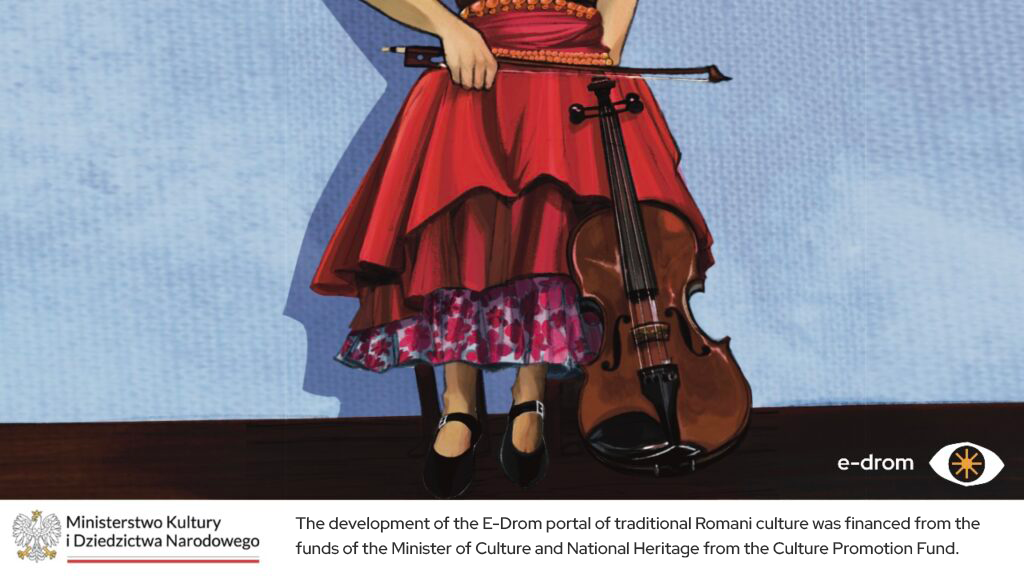
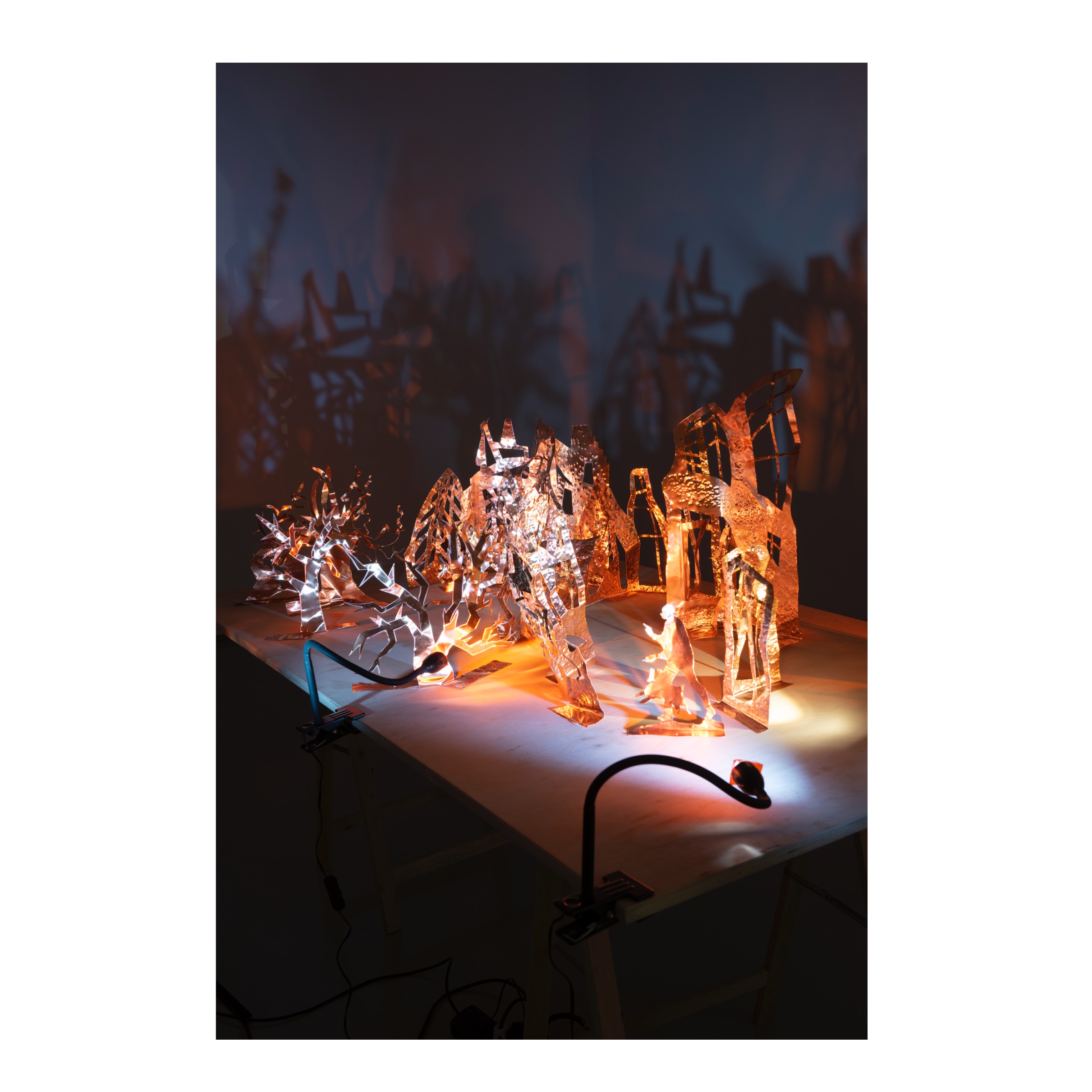
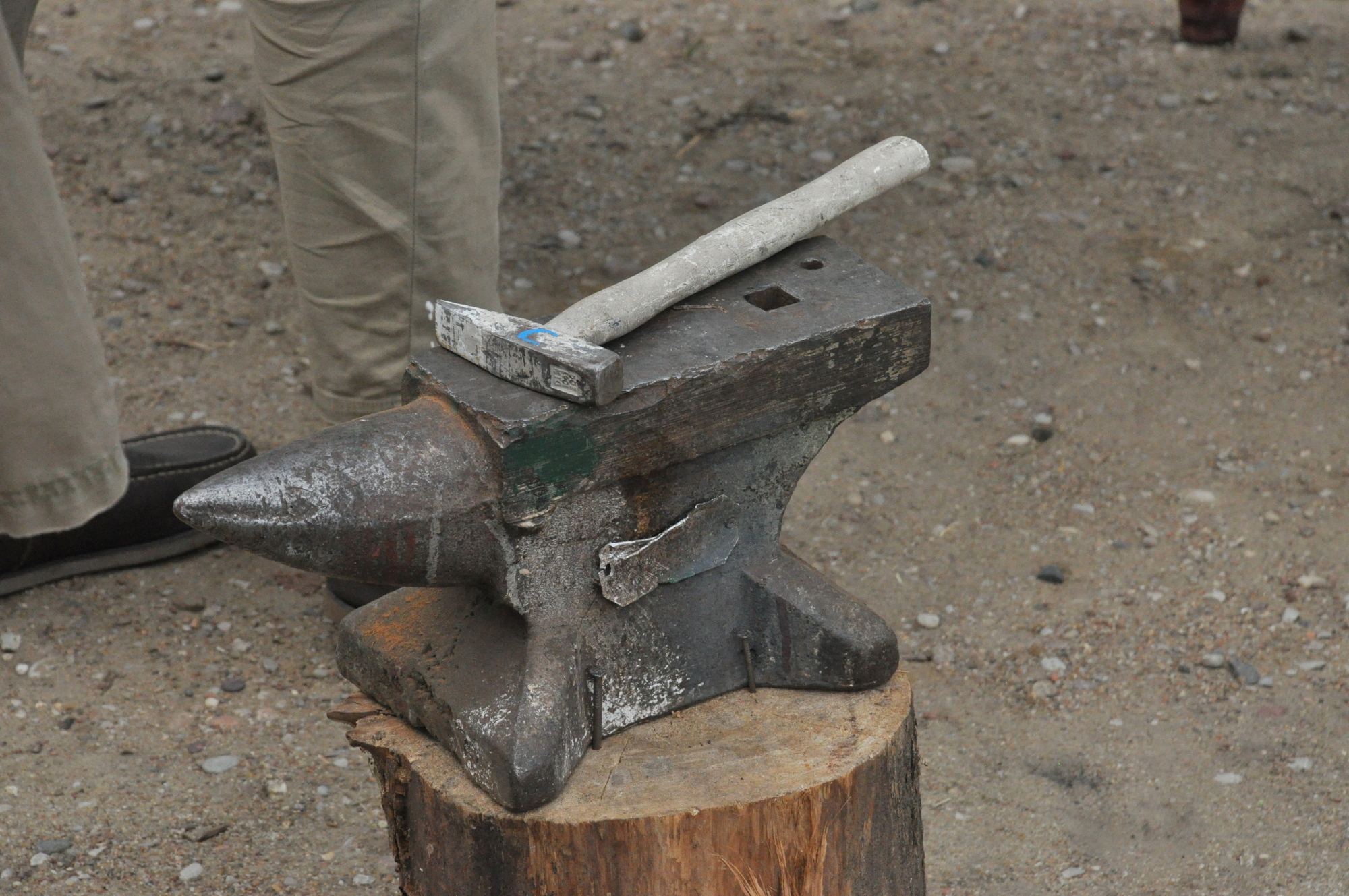
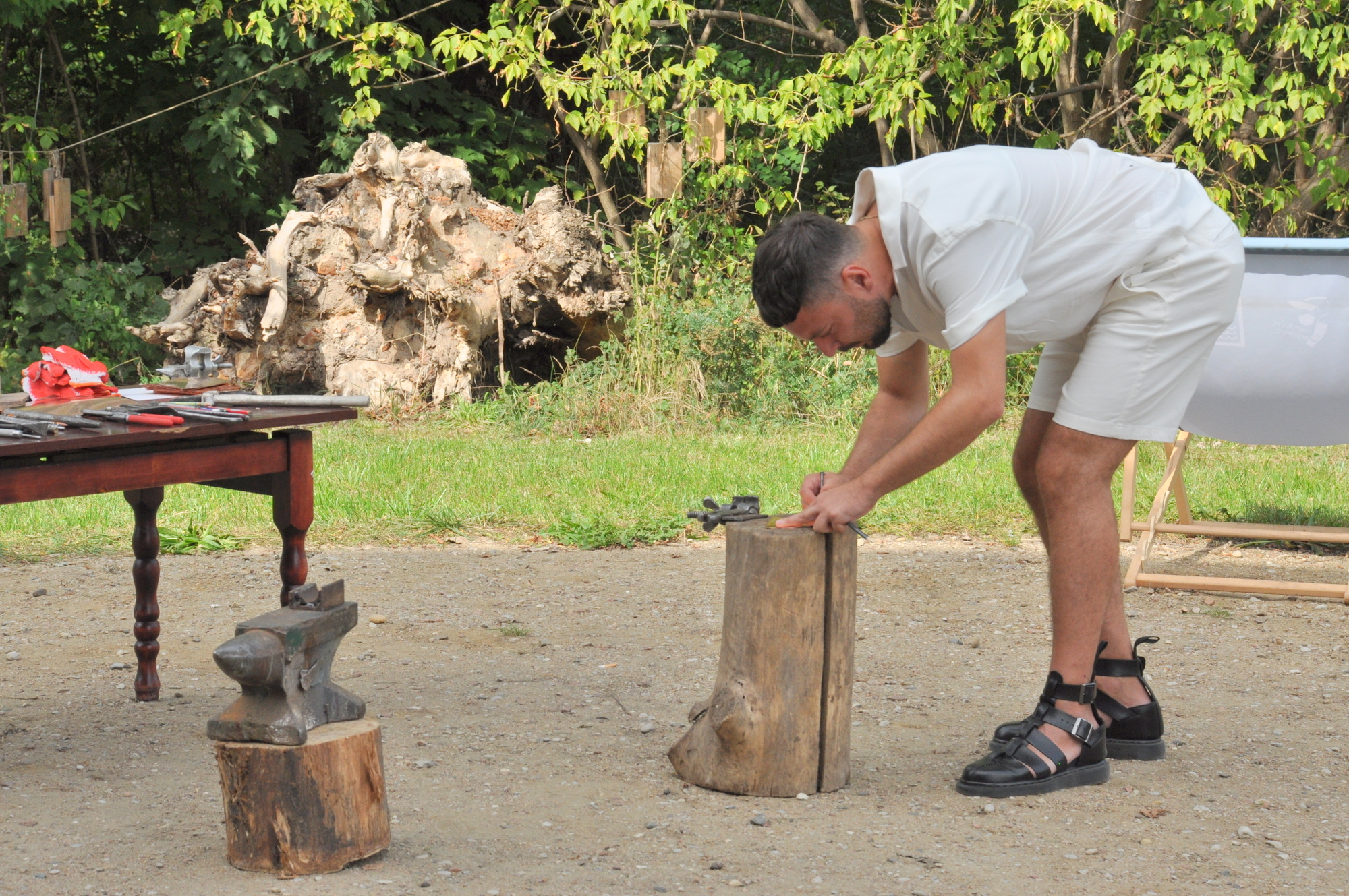
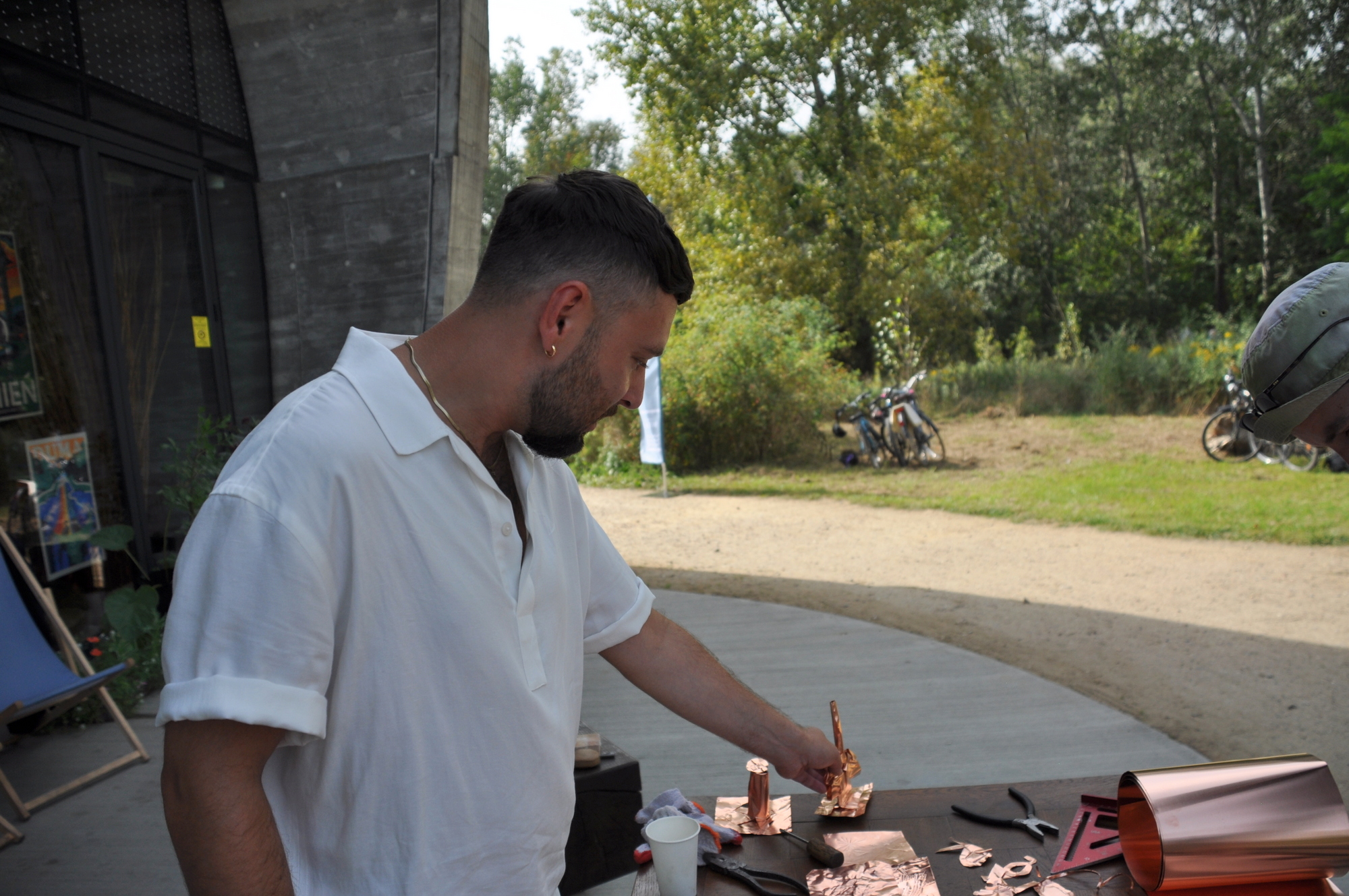
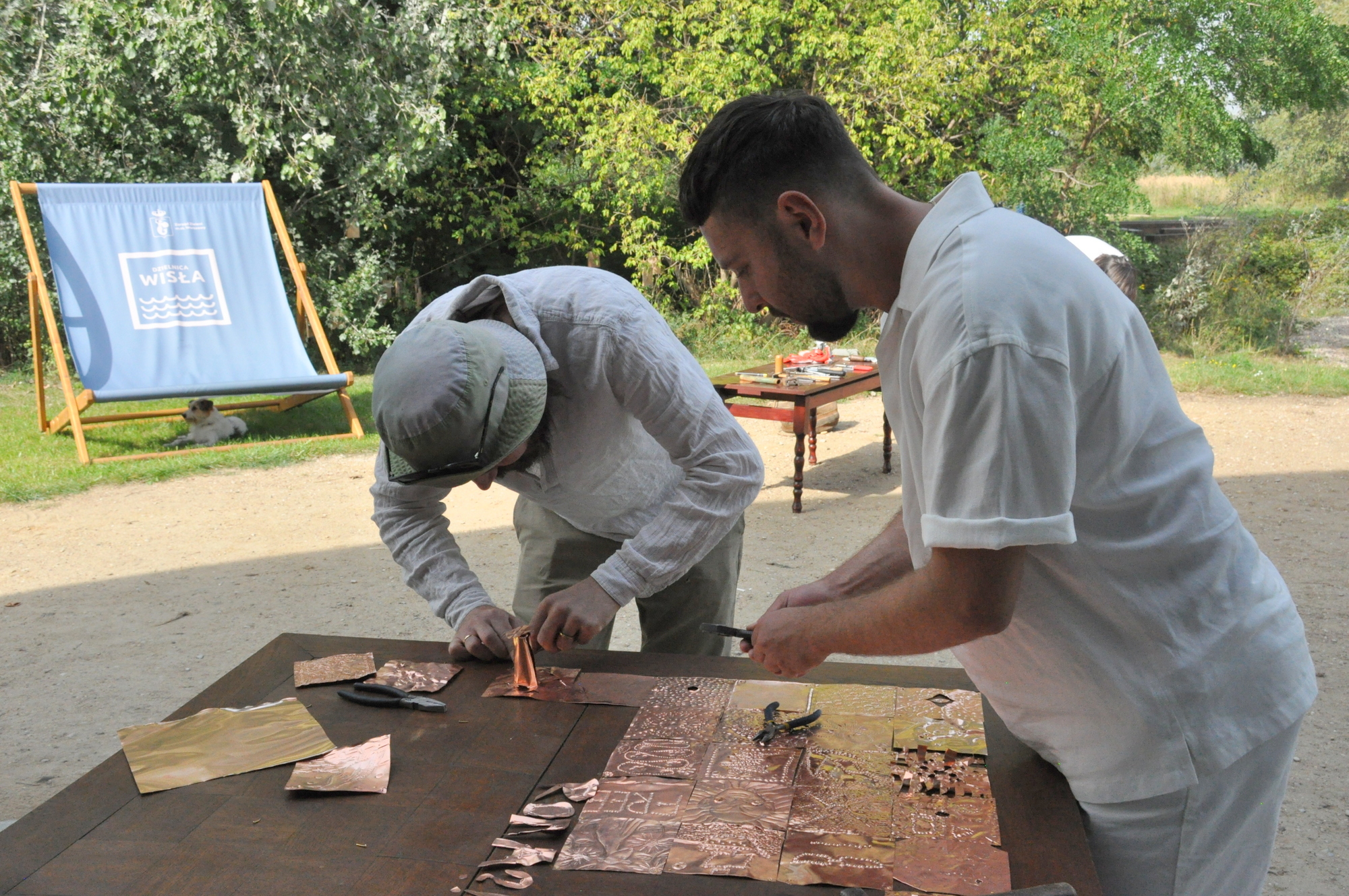
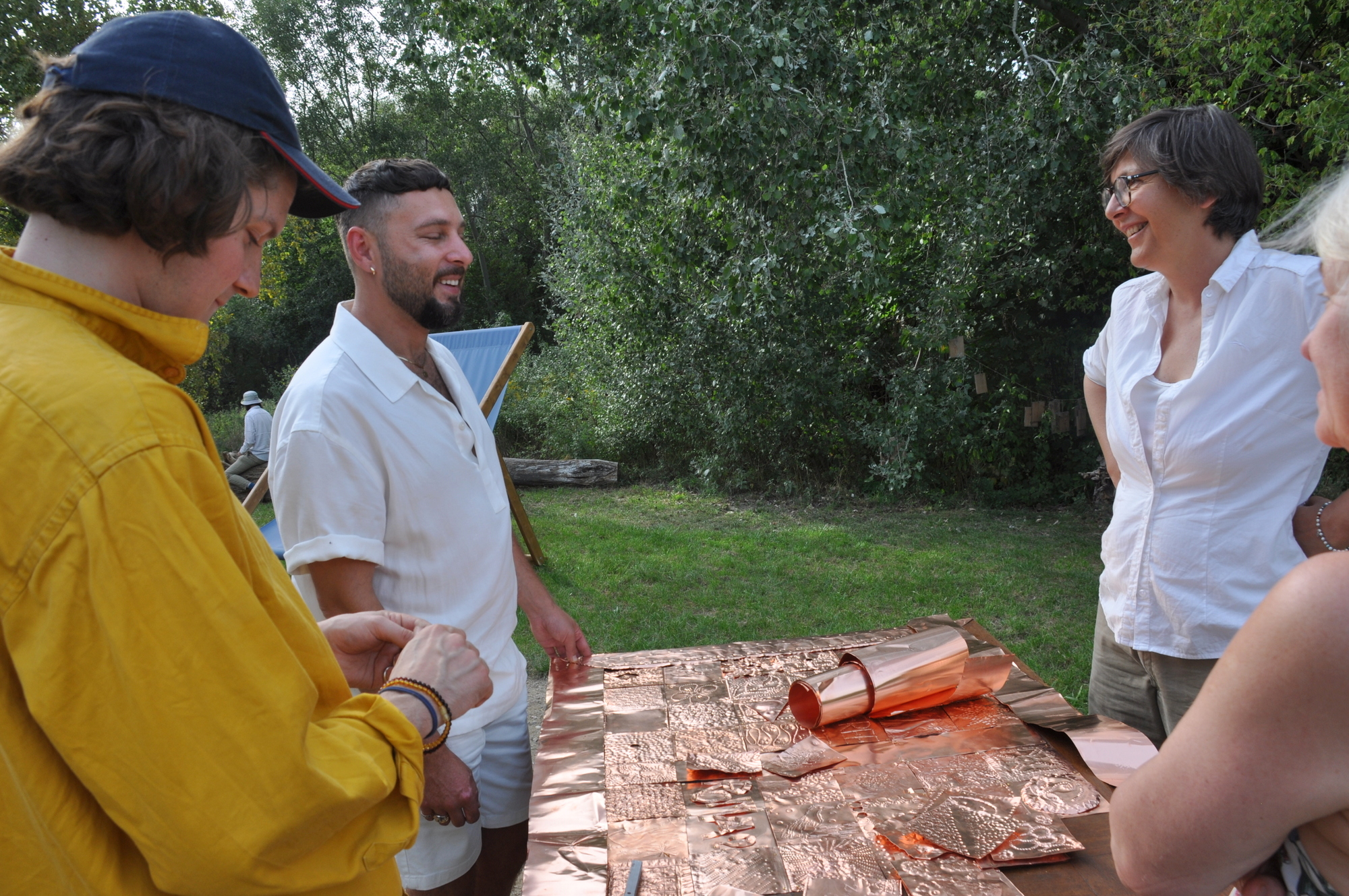
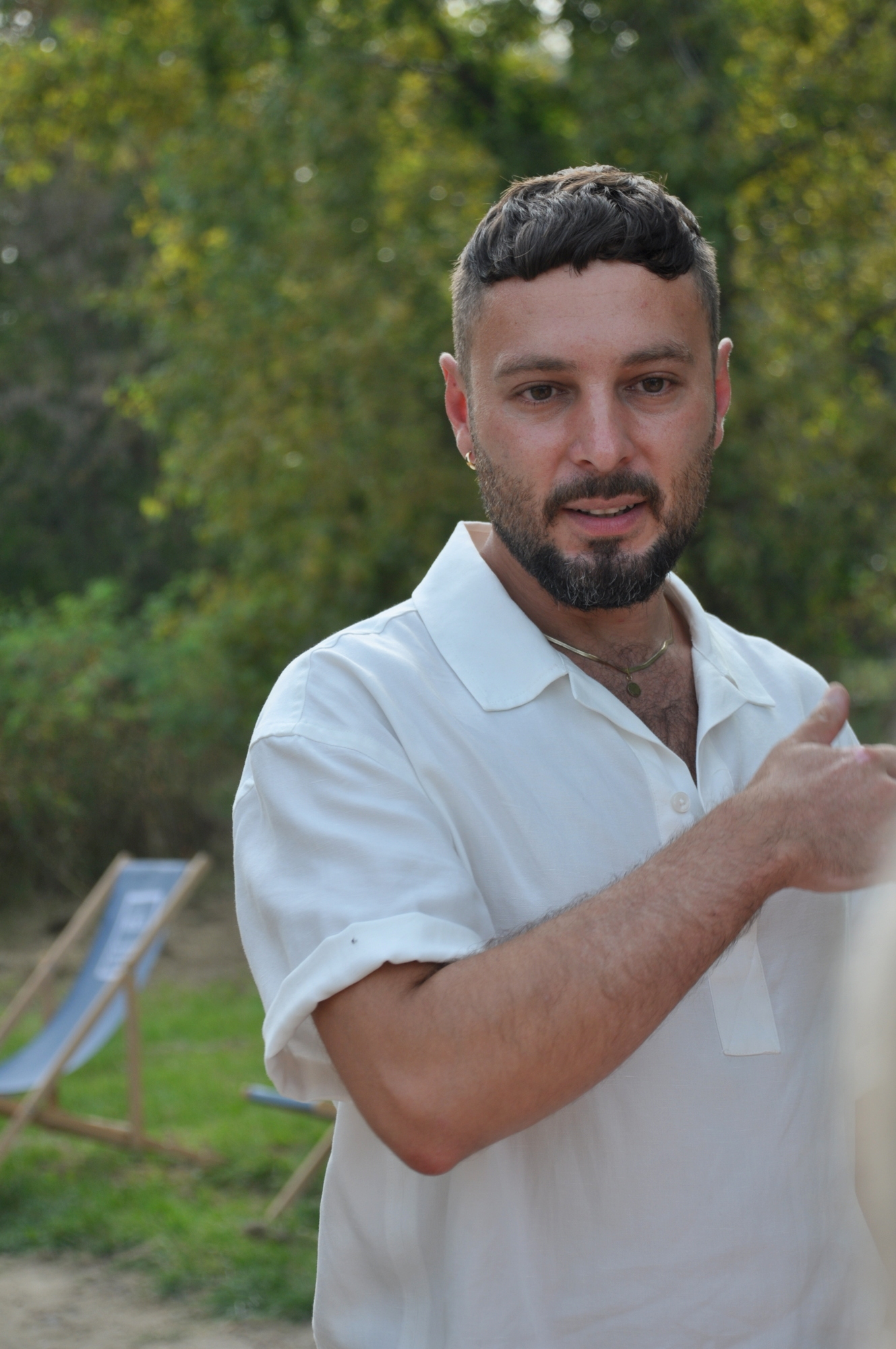
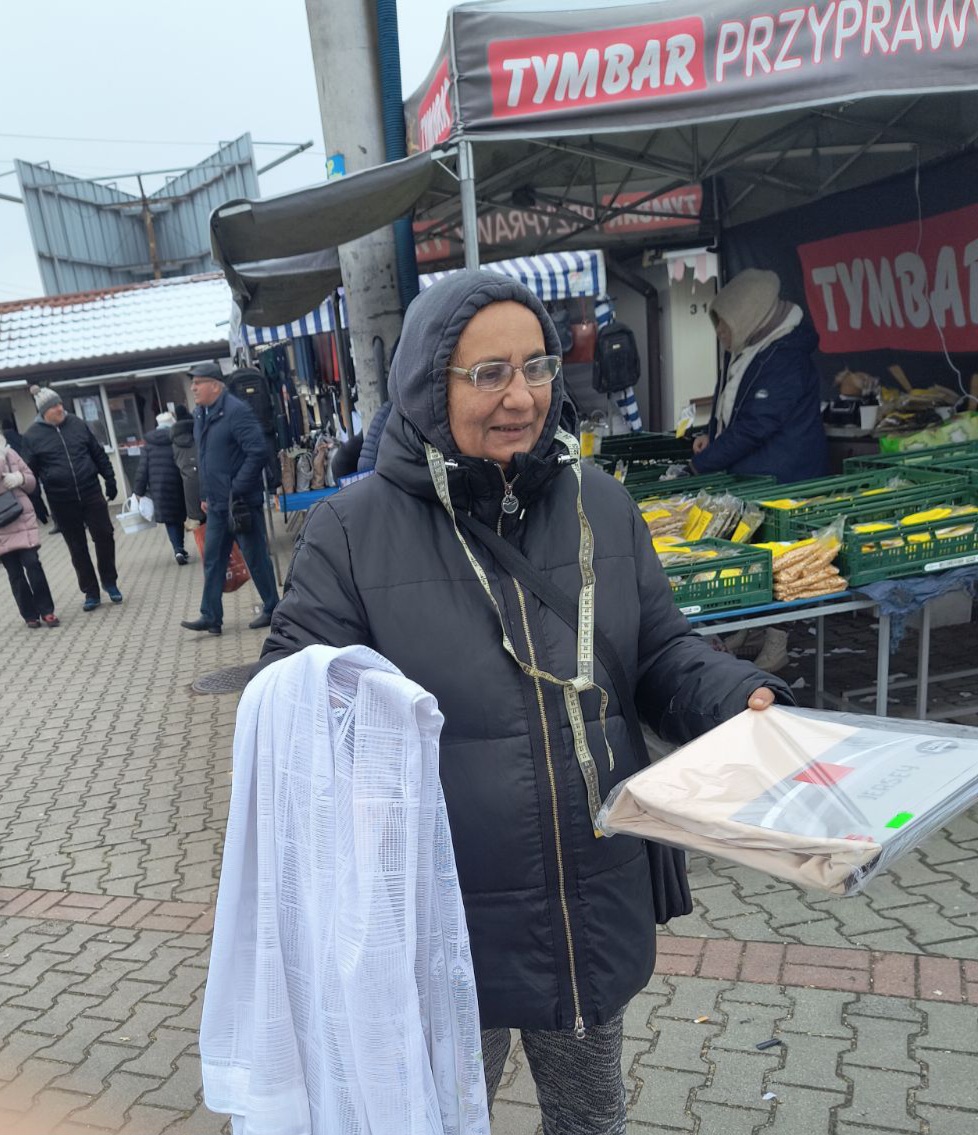
The “Dictionary of Romani Polite Expressions” was created jointly by Roma children attending the community centre run by Fundacja Dom Pokoju in Wrocław and by the artist Klaudia Borawiak, a graphic design student at SWPS University in Wrocław.
The project combines language education with artistic practice. The children created illustrations for Romani polite expressions, which were then graphically developed and animated. The activity supports language learning through creative play, while at the same time strengthening children’s agency and increasing the visibility of Romani culture.
The “Dictionary of Romani Polite Expressions” is part of the Contemporary gallery, available on E-Drom — a portal dedicated to the culture of Roma people.
The “Dictionary of Romani Polite Expressions” was created jointly by Roma children attending the community centre run by Fundacja Dom Pokoju in Wrocław and by the artist Klaudia Borawiak, a graphic design student at SWPS University in Wrocław.
The project combines language education with artistic practice. The children created illustrations for Romani polite expressions, which were then graphically developed and animated. The activity supports language learning through creative play, while at the same time strengthening children’s agency and increasing the visibility of Romani culture.
The “Dictionary of Romani Polite Expressions” is part of the Contemporary gallery, available on E-Drom — a portal dedicated to the culture of Roma people.
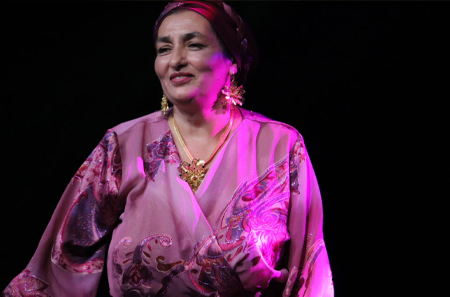
An interview with Perła Krystyna Markowska, singer, leader of the band Perła i Bracia, and president of the Centre for Roma Advice and Information in Poland.
Introduction
Perła Krystyna Markowska – a distinguished artist, vocalist, Roma activist, and head of the Centre for Roma Advice and Information in Poland. Born in Otwock, née Wiśniewska, she comes from the Polska Roma group. For many years she has combined artistic work with social engagement, becoming one of the most recognizable Roma women leaders in Poland.
Perła is also the founder and leader of the band Perła i Bracia, which performs vocal-instrumental Roma music, drawing inspiration from jazz and from the traditions of the Sinti and Eastern European Roma. In their new arrangements of old songs, the group preserves authenticity and emotional honesty, always performing live. On stage, Perła is accompanied by her husband – guitarist Zdzisław Markowski. Together they create music that connects generations and reminds audiences of the enduring strength of Roma culture.
The Roma Anthem – “Djelem, Djelem”
Today we meet to talk about “Djelem, Djelem”, the Roma anthem. The lyrics were written by Žarko Jovanović – a Serbian Roma poet and activist who fought in the resistance movement during World War II and later settled in Paris. The text is based on a traditional Roma melody from the eastern Balkans. The song carries the memory of the Roma genocide, but also a message of unity, strength, and pride.
During the First World Roma Congress, held in London in 1971, the piece was officially adopted as the Roma anthem, together with the Roma flag. It was a groundbreaking moment – the first time Roma people appeared on the international stage, presenting their own national symbols.
The Roma Flag
The Roma flag consists of two horizontal stripes – blue at the top, symbolizing the sky, freedom, and spirituality, and green at the bottom, representing the earth, nature, and rootedness. In the center is a red wheel – the wheel of a wagon, symbolizing the Roma journey and identity. The wheel also refers to the Indian chakra, reminding us of the Roma’s ancestral origins in India.
E-Drom: Krystyna, why was the song “Djelem, Djelem” chosen as the Roma anthem?
Perła Krystyna Markowska: Honestly, there aren’t many historical sources explaining this in detail. The decision was made at the 1971 Roma Congress in London. It was the participants who proposed this song. Perhaps there were no other suggestions, or perhaps they simply felt that Djelem, Djelem best expressed the spirit, unity, and history of the Roma people.
E-Drom: What message does the song carry?
Perła: It’s a song about travelling and about encounters – about how Roma people, wherever they are, carry the same memory and longing for freedom and togetherness. In our songs, meanings are often hidden. When we sing “there is no bread, there is no water,” it’s not just about hunger – it’s about the lack of life and hope. Djelem, Djelem also hides such deeper meanings: it speaks about life, about the fate of the Roma, about our history and the experience of persecution.
E-Drom: The song speaks of travelling – Roma people still move around today, though in different ways. Is that symbolism still relevant?
Perła: Very much so. Travelling is a part of us – only the means have changed. Today it’s not wagons and horses, but cars, trains, and planes. Many families move in search of work, a better life, or simply to be with their relatives. And not because Roma are “romantic” and love to wander – it has never been a matter of romanticism, but of history and necessity. In the past, travelling was work: making pots, repairing tools, trading horses, fortune-telling. It wasn’t adventure – it was survival. When a community no longer needed certain services, people had to move on. During the war, they travelled to hide and to save their lives. Today, the reasons are often the same as for many Poles: better opportunities, employment abroad, or more openness in Western societies. In countries like the UK or Ireland, Roma people find work more easily, as diversity there is a normal part of life. So yes – the journey continues, but it has changed form. It’s not romanticism – it’s life.
E-Drom: For young Roma people – what message does Djelem, Djelem carry?
Perła: Young people understand very well what an anthem means. They know that every nation has one – and so do we. When they hear Djelem, Djelem, they stand up immediately, because it’s more than just a song. It’s a symbol of community, memory, and dignity.
E-Drom: During our Summer Workshop Camp – a camp for young Roma from Poland, the Czech Republic, Slovakia, and Hungary, focused on developing social skills and strengthening Roma identity – the artist Angelo Czureja, who led the singing workshops, announced that he would perform Djelem, Djelem, the Roma anthem. Everyone stood up at once. The Roma sang, while the non-Roma stood silently in respect. The atmosphere was deeply solemn. It was a moment that showed just how powerful and unifying this song is. What do you think lies behind that power?
Perła: I think it’s the shared emotion – that collective experience. Even if not everyone knows the words, the anthem touches something deep inside. It carries not only history but also emotion, memory, and a sense of unity.
E-Drom: Do you perform Djelem, Djelem with your band Perła i Bracia?
Perła: No, we don’t. Out of respect for the anthem, we don’t include it in our concerts. If I were to sing it, I would perform it as an anthem – solemnly and with reverence. But not every concert or festival is the right context. I wouldn’t want people to dance to the anthem – that would feel disrespectful.
E-Drom: How do you feel about various interpretations of this song – from traditional to modern, like those by Barcelona Gipsy Klezmer Orchestra or Viki Gabor?
Perła: I’ve heard many versions. Sometimes it’s no longer the anthem, but rather a traditional song with different words and rhythm – and that’s fine, as long as people know the difference. When someone announces Djelem, Djelem as the anthem, we stand up – because then it’s a symbol. But when it’s performed artistically, it becomes a folk song again – and that’s beautiful in its own way.
E-Drom: The Roma flag was adopted at the same Congress as the anthem. What does it mean to you?
Perła: I think it’s very meaningful. The blue is the sky and freedom, the green is the earth and rootedness, and the red wheel represents our journey and our origins in India. It’s everything that’s in our hearts. Older generations may not display it openly, but young people identify with it strongly. I often see them wearing T-shirts with the flag or posting it on social media – and that’s wonderful. It shows pride in being Roma.
E-Drom: So the anthem and the flag still unite Roma people?
Perła: Yes – and more than ever. Older Roma didn’t need to show who they were; they simply knew. Today’s youth want to express it – and that’s great. In a world where pop culture makes everything look the same, these symbols help us preserve our identity.
E-Drom: Thank you, Krystyna, for this conversation and for reminding us that a song can be more than just music – it can be memory, pride, and community.
Djelem, djelem (Short Version)
Djelem, djelem, lungone dromensa,
Maladilem baxtale Romensa.
A Romale, katar tumen aven?
E, cheasa baxtale Romalen!
Translation
I travelled long, long roads,
I met happy Roma.
Oh Roma, where do you come from?
With joyful, happy Roma!
Djelem, djelem (Long Version)
Djelem, djelem, lungone dromensa,
Maladilem baxtale Romensa.
Djelem, djelem, lungone dromensa,
Maladilem baxtale Romensa.
Ay, Romale, Ay, Chavale,
Ay, Romale, Ay, Chavale.
Ay Romale, katar tumen aven,
Le tserensa baxtale dromensa.
Vi man sas e bari familiya,
Tai mudardya la e kali legiya.
Aven mansa sa lumake Roma,
Kai putaile le Romane droma.
Ake vryama – ushti Roma akana,
Ame xutasa mishto kai kerasa.
Ay, Romale, Ay, Chavale,
Ay, Romale, Ay, Chavale.
Translation
I travelled along long roads,
I met happy Roma.
I travelled along long roads,
I met happy Roma.
Oh Roma, oh children,
Oh Roma, oh children,
Where do you come from,
With your happy homes and bright roads?
I once had a large family,
But the black legion killed them.
Come with me, Roma of the whole world,
For the Roma roads are opening again.
Now is the time – rise, Roma,
Let us unite and build together.
Oh Roma, oh children,
Oh Roma, oh children.
The development of the traditional Roma culture portal E-Drom was co-financed by funds from the Minister of Culture and National Heritage, originating from the Culture Promotion Fund.
Róża Łakatosz was born in Poznań, though she spent her teenage years in Wrocław, studying at the local Fine Arts High School. She is known for her poetic works, performance art, and her advocacy for the integration of the Roma community. She made her debut in the magazine “Rrom p-o Drom” shortly after its creation. In 2019, her poetry collection In the Concrete Forest was published. The roots of her artistic pursuits trace back to her performances with groups like “Roma” and “Tamburyno”. Active in various fields of art, Róża Łakatosz and I met to discuss her past and present – her creativity and life. Our conversation moved through time and space, touching on both distant and recent memories. Interwoven into our dialogue were poems – responses to posed and unspoken questions. One could even say that poetry became the central axis of the narrative…
I’ve already spoken with your children – Noemi and Delfin. Both said you encouraged their creative activities, acted as their manager, sought out competitions for them to participate in, and found venues to showcase their work. You took them to cultural events and always emphasized that the key is to have an idea and act “in your own way” – to avoid copying others. This suggests a set of principles you follow, but I wonder, what does your entire artistic, or perhaps life, manifesto sound like?
Of course, in some sense, I guided my children in what to do. I supervised, though perhaps not in the way one might imagine. An example: when Noemi was six, during Car-Free Day, we came up with the idea of having nearby cars leave tyre marks on a piece of paper. The cars left tread marks on the paper. The idea was to create something different. Once, for my first paintings of a Roma camp in Junikowo [Poznań] in winter, when I had no paints, I used toothpaste. In summer, I used whatever came from the earth, flowers, and anything else within reach. This was many years ago… Later, some artists, now well-known names, began working in a similar way, using methods close to mine. I was ahead of them with my ideas. My “seventh eye” worked, I predicted certain things. I didn’t say they’d happen, I just did them. I participated in open-air painting sessions and numerous exhibitions – including those showcasing my children’s works. I created paintings for charity, which were sold to raise funds for community centres. I collaborate with the AMICI Skills Workshop. My works often feature the Roma flag motif or nature rendered poetically. Everything I see, I process through my memories and identity. I weave in elements important to me. As for the manifesto, everything is in this poem.
Please read it…
[Loose translation from Polish to English]
Skin.
You cannot strip it of
                its identity.

You can whiten it
                but not the soul

                          trapped in the image of otherness.

Your place.
How to find it in the rest of the world’s cities?
Displacement.
                 A multigenerational

                                      family rug.

                  It settles where it wishes to be free.

                  In a permanent home.

                                       Without the compulsion of settlement.

It does not want
                 in ghettos or slums

                                     on the outskirts,

                  nor to be excluded

                                     socially and economically.

                  In a closed circle of unemployment

                                      poverty, illiteracy.

                  In the absence of opportunities for social advancement.

Fear.
Of the open space of the city.
                       In the crucible of diversity – excluded.

                        Like pawns from other games.

Assimilation.
Because here
                   this country is only for those

                                         adapted to the rest.

The city dislikes diversity
                       in the tidy flowerbed

                       of identical plants.

Being yourself.
You must croak like them among them!
Without resident status,
                         no job and deportation.

The Drzymała Wagon.
In modern style
                         travel and container life

                          unconnected to others –

                          the loss of family ties.

Everyone in their own – separated.
Existing
                         on the rubbish of the present.

                          Playing

                          with the scraps of yesterday.

Otherness.
We are aware of it
                        yet stigmatised

                               as a lower class of people.

Learn
                       to recognise otherness.

It will enrich you
                      without anti-Romani sentiment.

Do not perceive
                      culture

                       as a collection

                       of folkloric images.

Accustoming
                     to an easy life

                      on society’s benefits,

                      will only lead to

                      a fascination with consumerism

                      and dressing up

                      in metropolitan clothes.

They will disappear into the crowd of similar ones.
I am Roma
 and everything before me is

                         closed

in the perspective of a journey
to something better?…

(Róża Łakatosz, Nomads of the 21st Century, from the collection In the Concrete Forest - W Betonowym Lesie)
Photo: Delfin Łakatosz, Roma Culture Festival – Romani Kultura, Łódź 2022
This summarises what lies within us. The poem was written several years ago, and things may have changed over time because there is now a greater awareness of identity, though not all Roma wish to know about it…
This theme connects to maintaining one’s identity and being oneself in a world where people often conform, sometimes to the point of avoiding standing out…
You are
          cheerful, hospitable, sociable,

           internally united.

You will defend your own identity.
You are free by birth.
You are behind a wall of inscriptions:
         “kicks from boots…”

          and “a good one is a dead one”.

You are to blame
– for your otherness!
In a closed community
        where a city within a city

there, only, will you not feel different.
You – who bathed in sunlight,
    in the breeze felt

the taste of rains.
You – who were driven from places not yours,
   forested, riverbank,

    suburban,

    from the outskirts of villages.

In the returns of birds,
  from lack of nests

stateless in all senses.
You do not fit Europe
Though you are,
                       We are

                        everywhere.

(Róża Łakatosz, …From Which No Trace Remained, from the collection In the Concrete Forest)
On 13 December, at the Polan Sto Gallery, the exhibition Identity will open as part of the 17th Environmental Review EKOART. Although I am not part of this group, I was invited to present my works.
What have you observed regarding relations between different Roma groups and their efforts to uphold Roma traditions? How was it in the past?
Many Roma are accustomed only to their own group and know little about others. Such a divide began in the late 1980s and early 1990s. I remember what it was like in 1989. We spent two weeks in Białystok with our group, rehearsing. From there, we travelled across Poland and moved further, eventually reaching Vienna. At the UN headquarters, a conference about the Roma was held alongside a Roma festival, which included a competition of bands. I recall we weren’t allowed to see other groups participating – apparently, to avoid feeling embarrassed or discouraged from performing. During this event, funds were raised for the following year’s initiatives. After returning to Poland from Vienna, two weeks later, there was a revolution in Romania. In April, all the groups met again and went as a delegation to the European Parliament in Strasbourg. We travelled through Gorzów, Wrocław, and Prague, picking up Roma along the way. Roma from Prague didn’t follow traditional Roma customs. On our return through Germany, we wanted to stop at an inn for a drink. Stanisław Stankiewicz, who was with us, asked if we could enter. We were welcomed at first, but when they saw the Roma from Prague, they shouted, “Raus!” and refused to let us stay together. So, we all left. It was terrible. Returning to Strasbourg… a large table was set for all groups, each representing a different country. Everyone sat in their section, playing their music. People could mingle, but no one did. We had concerts in various places outside Strasbourg. One day, Don Vasyl took us to a cathedral courtyard where our performance was planned. We didn’t know that at 8:45 p.m., the bells would chime for 15 minutes, commemorating the cathedral’s preservation. Don Vasyl noticed a large group of Poles and decided we’d sing Anna Maria and White Cross. Though unexpected, it worked out. I later saw a recording of that moment and remembered the notable figures present, including Esma Redzepova from Macedonia. We met her again 20 years later at the Malta Festival. My children were small, and we were the only Roma who stayed late to watch her evening performance. Though security initially stopped me, she recognised me, and we reconnected. During the European Parliament sessions in Strasbourg, anti-Roma incidents and dangers were discussed. Roma texts were translated into English, German, and Spanish so all could understand. At the 4th Congress of the International Romani Union in Jadwisin near Serock in June 1990, discussions focused on standardising Romani script.
Róża Łakatosz at the 4th Congress of the International Roma Union (in white dress), photo: private archive of Róża Łakatosz
What is your assessment of modern interpersonal relations, even among neighbours, which should be close connections?
How close…

    behind backs,
    behind door handles,
    colours of one rainbow locked
    listening to melodies of past lives.

These hands…

    this pink one
    praises the city,
    the swarthy one protects the birch grove.

To their worlds

    greedily pulling away.

Today’s phones,

    tangled threads
    connect thoughts
    to unknown faces
    turned – they see
    curious – themselves.

Let there be

    opening,
    let’s talk,
    exchange unknown past for today.

The echo of the forest settles,

    hope for new
    ours – we!

(Róża Łakatosz, Neighbours, from the collection In the Concrete Forest)
This poem and my artwork won first place in the competition Gypsies – My Neighbours, organised by the Social Integration Foundation PROM from Wrocław.
What has your artistic activity looked like over the years? Is much happening in the theatrical field?
I participated in the first editions of the Ethno Port Festival, dancing alongside Roma artists. In 2013, I performed in The Rite of Spring, a project by Iwona Pasińska from the Polish Dance Theatre. Large paper models of internal organs were featured. I danced with a giant heart, symbolically representing our “selves,” which was later thrown onto a pile from which children emerged, symbolising birth. Later, I was invited to Fallen Angels but declined because I didn’t want to be part of a uniform-clad performance. I participated in Circostrada, where for two weeks, under Przemysław Grządziela’s guidance, we practised circus arts, including juggling. I portrayed a music box figure, slowly turning on a platform. I also appeared in The Wedding: Afterparty directed by Marcin Liber with the Polish Dance Theatre in Poznań and last year in Our Hollywood, organised by Poznań’s Tramway House and the Artcluster Foundation. Recently, I performed in The Isle of the Dead, conceived by Iwona Pasińska, a poetic hand ballet by the Polish Dance Theatre. Its continuation, the eighth choreographic film project, will premiere on 14 December during the 6th International Festival “One Page – One Look – 180 Seconds.”
And writing? Are you creating new poems? I read you’ve been invited to schools to read your works and present Roma traditions. Does this still happen?
Such events have been rare. I learned that Edyta Kulczak hosts poetry meetings, which have been ongoing for two years at Jeżyckie Cultural Centre [Poznań]. These sessions explore chosen topics and details to inspire associations and writing impulses. I’ve always written outdoors, finding inspiration in fields, not within four walls. I entered a poetry contest for seniors in Poznań and won the top prize. The winning poem is about me…
Ephemeral,

    settled with fog
    in the shallows of a rushing day.

Trampled

    by the new beating
    of fleeing echoes of "yes".

With the taste of summer

    imbued with the scent of fields.

Many years

    grasped greedily
    in memory’s net.

Consumed

    in solitude,
    nights in dreams…

By the touch of wind

    in the sun’s warmth
    dancing with insects
    toward the streaks of shadow
    of fading "self."

(Róża Łakatosz, My Beautiful Moments, from the collection In the Concrete Forest)
My poetic works also appear in Wielkopolski Widnokręg.
Looking back, did you have anyone in your childhood who played the role you do for your children – a mentor or manager?
No, I achieved everything on my own.
What comes to mind when you reflect on those times?
In the 1980s, Poznań Television filmed my journey through the city, showing places I used to inhabit, a so-called Roma world. The programme touched on my experiences of nomadic life and past curiosities, covering life stories and practicalities like how carts were loaded. I remember the scents of autumn, flowers, cabbage, earth… and a unique smoke. It’s irreplaceable – not just any campfire, but that specific one. Even the wood isn’t the same now…
Author: Róża Łakatosz
My White Tree.

You are birch.

Sometimes stripped morning bark.

On the trunk, furrows of difficult years.

With tears marked traces of winters.

You no longer want…

    I will blow away time’s dust.

    I will rediscover you

    removing layers of bad moments.

Your sad hair, mamiori,* In the fragility of branches and leaves.

I will find the green spark.

It is in the trunk – the fire –

    it

    will never burn out completely…
(Róża Łakatosz, Miro Parno Kaštoro** from the collection In the Concrete Forest)
* Translation: "mamiori" - mother
** Translation: “Miro Parno Kaštoro” - My White Tree
Interview by Justyna Żarczyńska
2024
The poems by Róża Łakatosz featured in the collection W betonowym lesie – In the Concrete Forest were published with the kind support of the Literary Foundation “Jak podanie ręki”.
Gallery of works and portraits of and by Róża Łakatosz
The gallery was not found!
The photographs are from the archives of the Dom Kultury Foundation and the private archive of Róża Łakatosz.
Co-financed by the KPO. GRANTS 2024. A2.5.1: Programme to support the activities of cultural and creative industries operators to stimulate their development.
We began 2026 with an important change – the e-drom.pl portal, dedicated to the culture of Roma people, has received a new version and a new graphic design. Our goal was to make the materials collected over the years easier to find, more logically organized, and more user-friendly.
The new design of the portal was created by Andrzej Budek from the visual design agency Kotbury. The technical implementation was carried out by Wojtek Berezowski. Along with the new version, a new logo of the portal was also introduced, designed by the artist Marcin Tas.
The website refresh is only the beginning of the activities planned for this year. Thanks to funding from the Minister of Culture and National Heritage under the “Folk and Traditional Culture” programme, we will continue to expand the portal with additional documentary and research materials on Romani culture.
Grafika: Aleksandra Głowacka
Fashion Gallery
One of the key plans for 2026 is the expansion of the Fashion Gallery, dedicated to traditional and contemporary Romani clothing. The gallery will include interviews with Romani women who will talk about the meaning of clothing, its role in everyday life, and the knowledge passed down through families over generations—including attire from the caravan (tabor) period.
The gallery is being developed in collaboration between Małgorzata Brus, a costume designer associated with the Dom Kultury Foundation, and Wanda Rutowicz—a seamstress and designer, owner of the Romani Fashion Studio.
Music and the Library of Living Voices
We are also planning to expand the Music gallery and the Library of Living Voices with a series of podcasts devoted to Romani songs.
The materials will be created by Monika Szewczyk and Elżbieta Mirga-Wójtowicz. As part of the project, they will conduct interviews and record songs performed by Roma men and women. Eight recordings will be produced, featuring participants from the regions of Małopolska, Silesia, and Podkarpacie. Each audio recording will be accompanied by an interview with the performer and an article introducing the cultural context of the presented repertoire.
We treat the development of the e-drom.pl portal as a long-term process of documenting and sharing knowledge about the culture of Roma people. The new version of the website is intended to facilitate access to the collected materials and to create space for further research, conversations, and recordings.
Zadanie w 2026 roku sfinansowano ze środków Ministra Kultury i Dziedzictwa Narodowego pochodzących z Funduszu Promocji Kultury.
Library of Living Voices is a podcast series featuring conversations led by Dr Monika Szewczyk and Dr Elżbieta Mirga-Wójtowicz with members of the Roma community and individuals connected to it. Each episode begins with the professions practiced by the interviewees—both those still active and those gradually disappearing. The discussions address contemporary realities, professional and social experiences, and memories of the past. They reflect on everyday life, cultural transformations, and the place of tradition in the present. The series documents individual life stories that illuminate key aspects of Roma culture—both traditional and contemporary. This collection forms a structured archive of oral testimonies, preserving knowledge, experience, and memory.
Monika Szewczyk talks to Krzysztof Gil about Romani blacksmithing
Photo: Krzysztof Gil’s private archive
Photo: Małgorzata Brus
Monika Szewczyk talks to Weronika Goga about Roma trading traditions
Fot. Arkadiusz Gola. Na fotografii Weronika Goga
Weronika Goga’s private archive
Monika Szewczyk talks to Robert Kierpacz about Romani musical traditions
Robert Kierpacz’s private archive
Graphic design of the Library of Living Voices – Aleksandra Głowacka
Biblioteka żywych głosów portalu E-Drom.pl jest realizowana przez Fundację Dom Kultury dzięki dofinansowaniu ze środków Ministra Kultury i Dziedzictwa Narodowego pochodzących z Funduszu Promocji Kultury.
Photo from the set by Delfin Łakatosz, photo: Marysia Wojnowska
Andżelika Fellman - Klupś
Antoni Tas
Artur Szczawiński
Damian Majewski
Edyta Jaśkowiak
Emilia Leśniak
Giselle Czureja
Gracjan Andrasz
Jessica Merstein
Lucyna Mirga
Roman Łakatosz
Mateusz Łakatosz
Mikołaj Jaworski
Noemi Łakatosz
Sara Czureja - Łakatosz
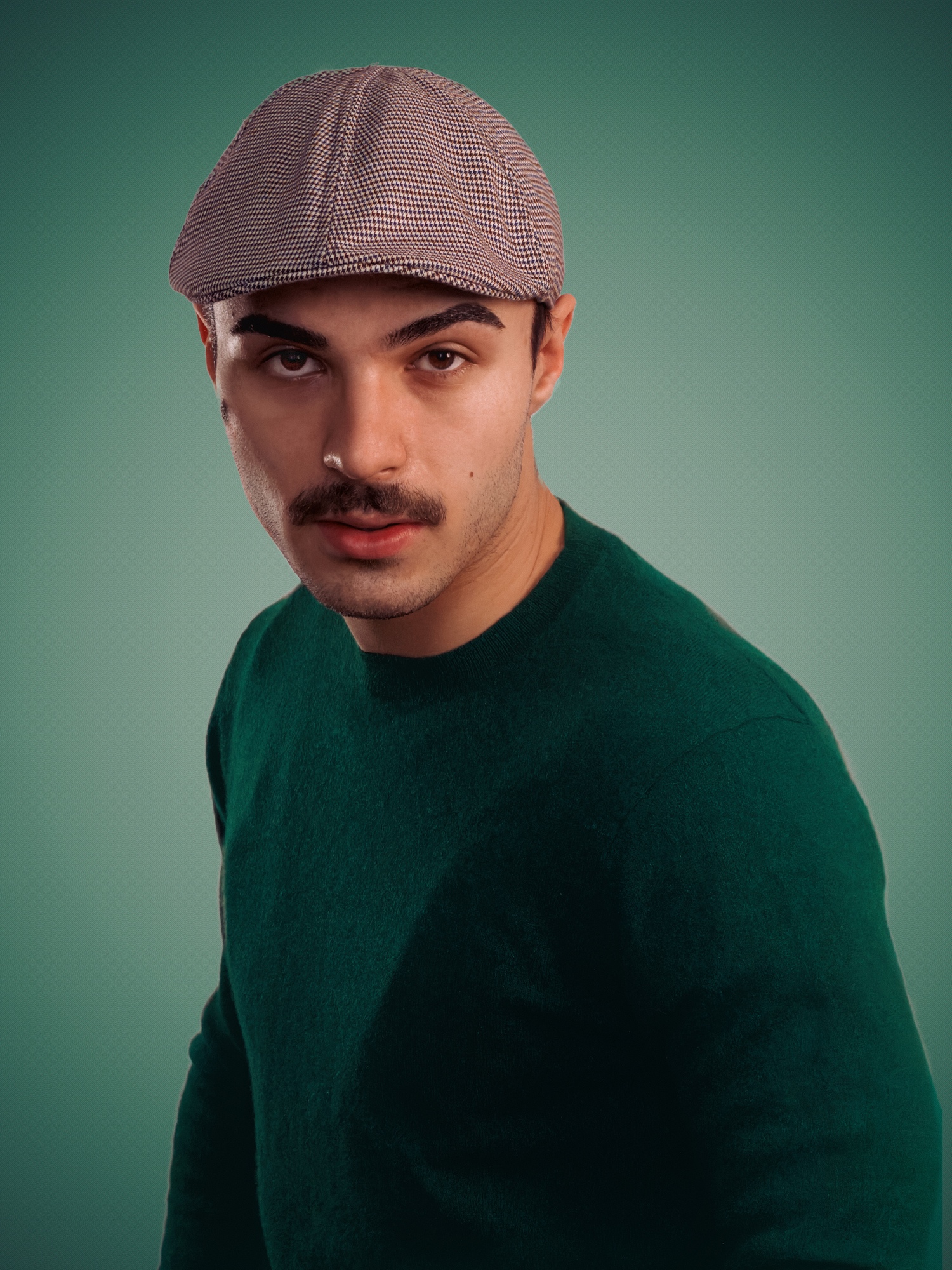
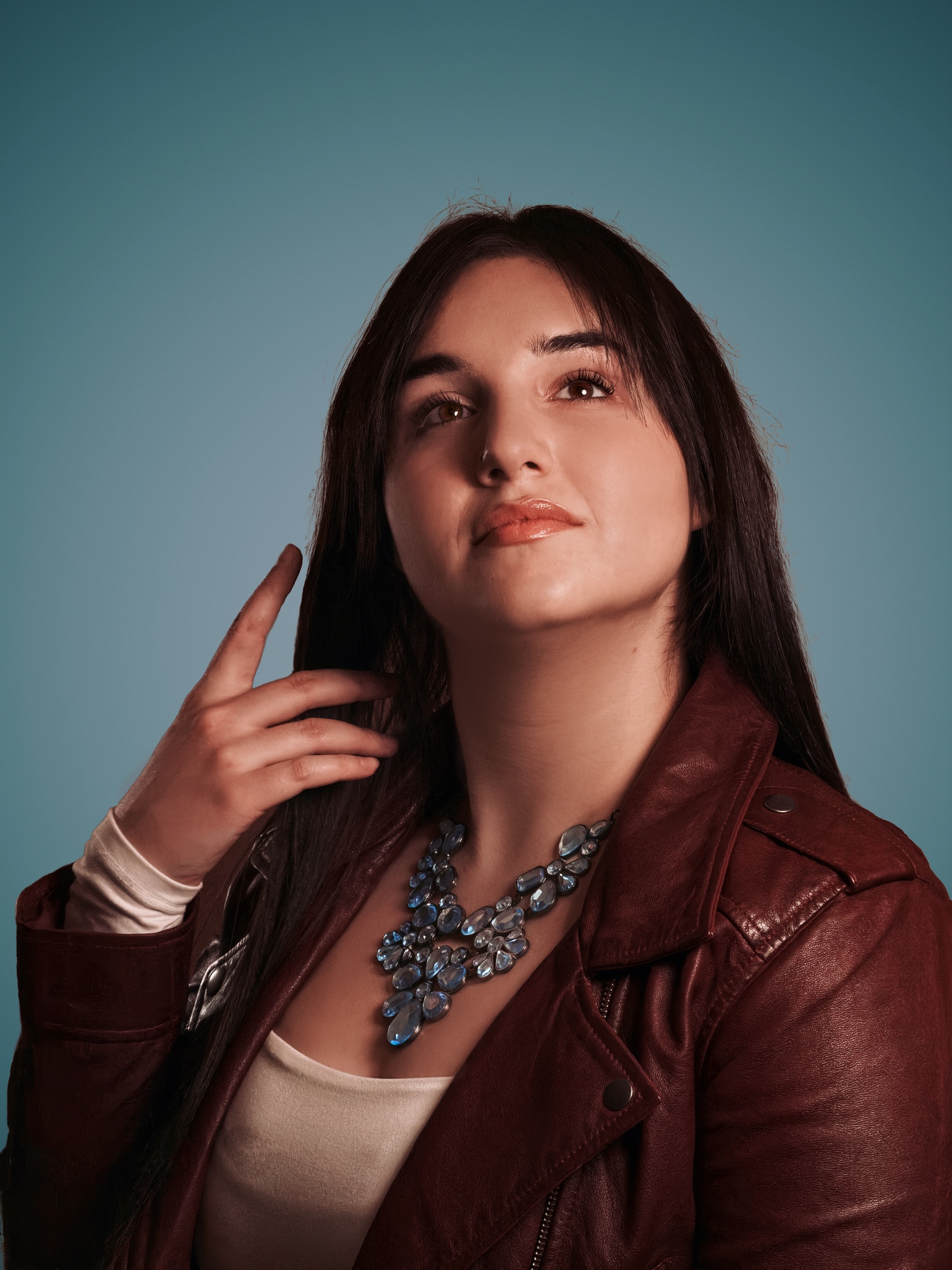
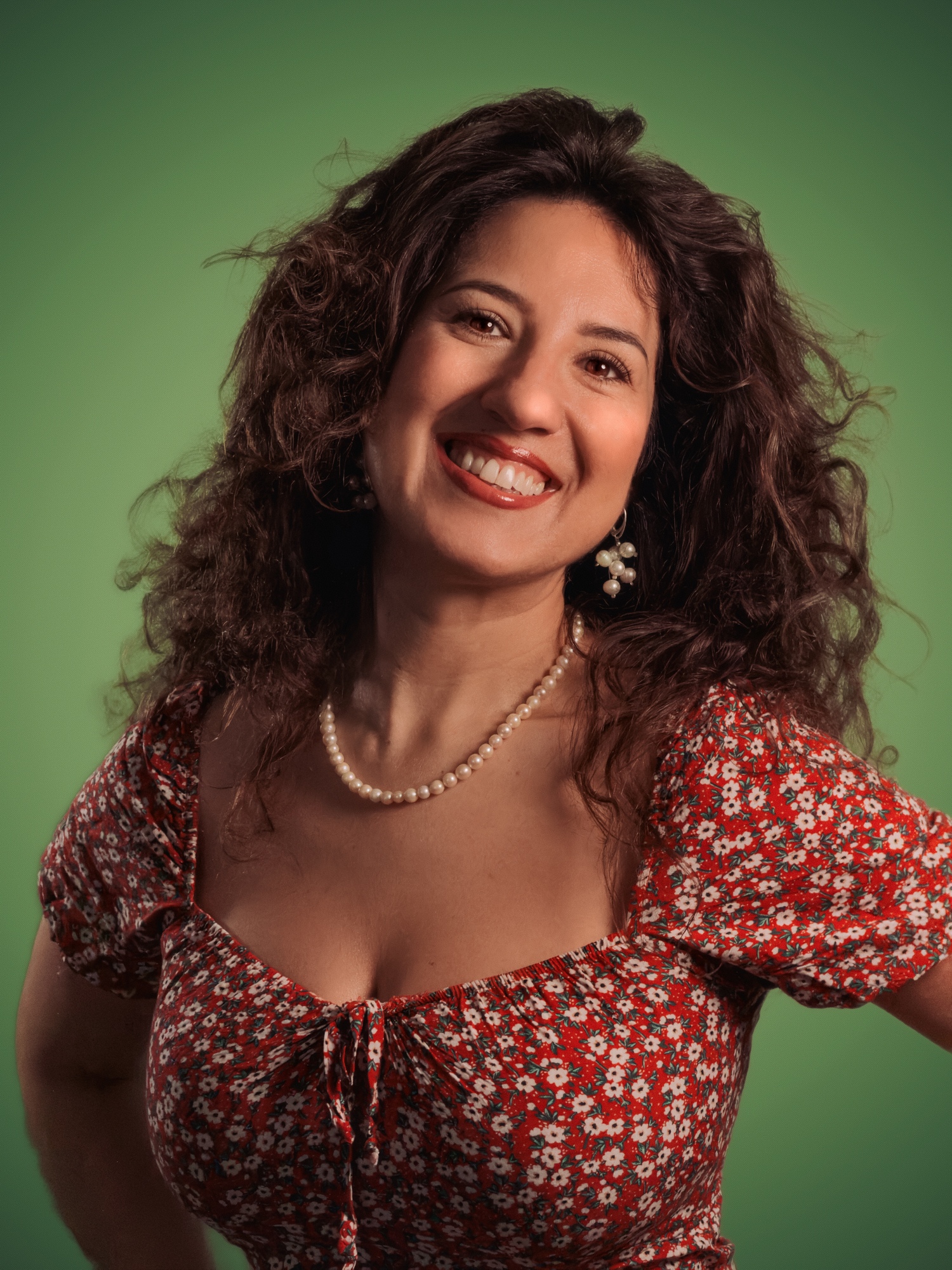
Photo: Delfin Łakatosz
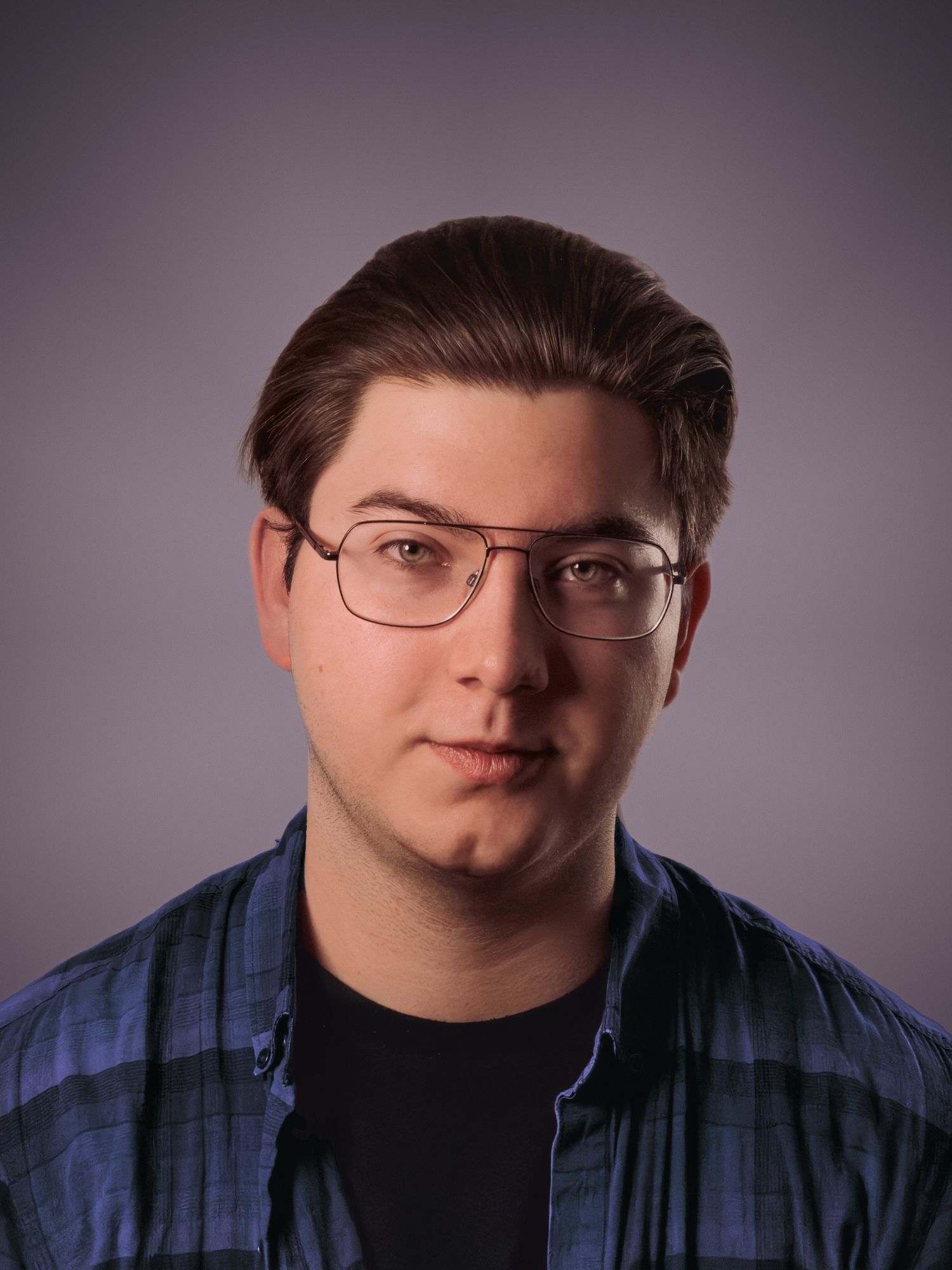
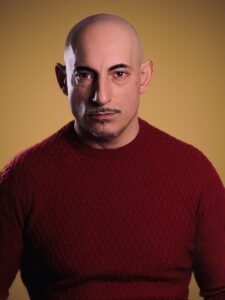
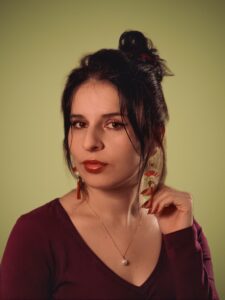
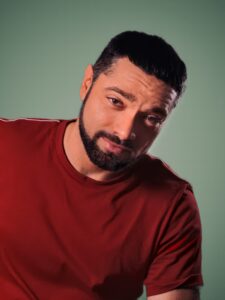
Each portrait is accompanied by a separate audio file. In these recordings, the people portrayed respond to questions asked by the artist:
What is your main strength, and what strength do you not have but would like to have?
What is the greatest happiness in everyday life?
What word do you associate with a contemporary Roma man/Roma woman?
What makes you happy?
By clicking on the recordings, you can get to know the people in the portraits and hear their answers — their own stories about themselves, how they see who they are, their strengths and limitations, their everyday lives, and what matters most to them.
The recordings are available exclusively in Polish.
Andżelika Fellman – Klupś
Economic technician, sales assistant, guide at the Educational Center “Niewidzialna Ulica” in Poznań
Antoni Tas
Student of International Cultural Studies at the Jagiellonian University
Sara Czureja – Łakatosz
Artist, instrumentalist, vocalist, virtuoso of the Hungarian cimbalom, leader of the Sara Czureja Band
Damian Majewski
Vocalist, musician, vice-president of the Association of Roma Culture and Education in Prudnik, Roma education assistant
Edyta Jaśkowiak
Vice-President of the Jududoro Association, Roma education assistant
Emilia Leśniak
Student, music instructor for children and youth
Giselle Czureja
Singer-songwriter
Mateusz Łakatosz
Singer, guitarist, student and aspiring musician
Jessica Merstein
Artist, composer, singer and violinist
Roman Łakatosz
Salesperson, singer and artist
Lucyna Mirga
Educational instructor on Roma culture, president of the association “Roma Culture and Education”
Gracjan Andrasz
Roma jazz violinist
Mikołaj Jaworski
Biotechnology student, accordionist
Noemi Łakatosz
Artist, visual artist, education and culture specialist at the Towards Dialogue Foundation
Artur Szczawiński
Singer and songwriter
Delfin Zefiryn Łakatosz (born 1994, Poznań) is an independent Roma filmmaker, photographer, and visual artist. In his work, he combines different film forms with themes related to Roma culture and contemporary youth.
Projekt „E-Drom 2025 – rekonstrukcja i rozbudowa portalu” jest dofinansowany z Krajowego Planu Odbudowy i Zwiększania Odporności (KPO) – KPO dla Kultury.
Rozwój portalu tradycyjnej kultury romskiej E-Dromdofinansowano ze środków Ministra Kultury i Dziedzictwa Narodowego pochodzących z Funduszu Promocji Kultury
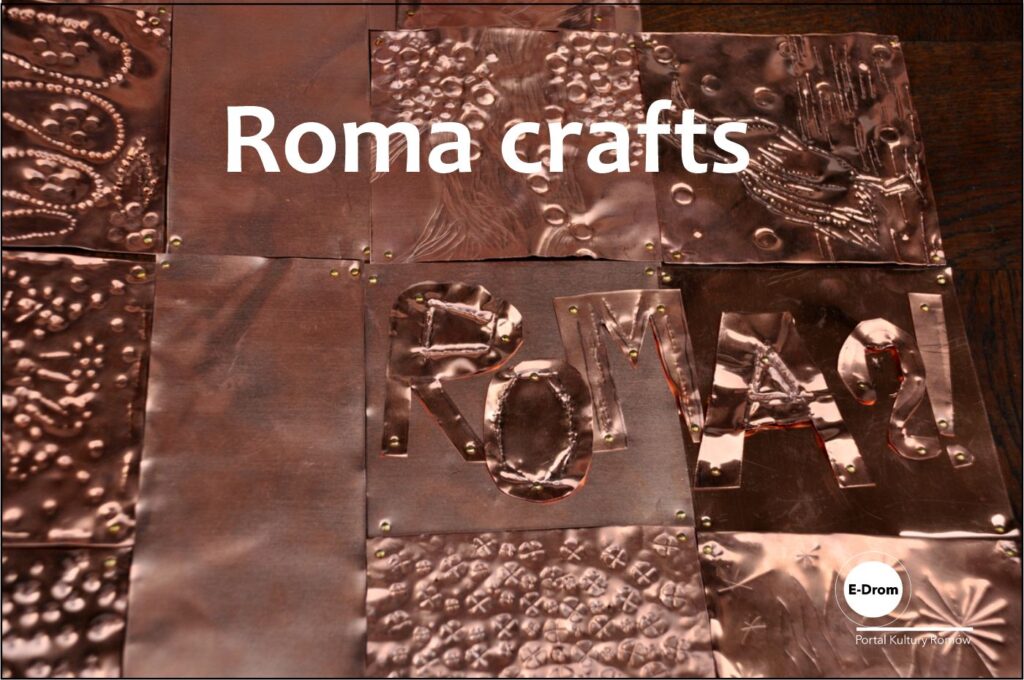
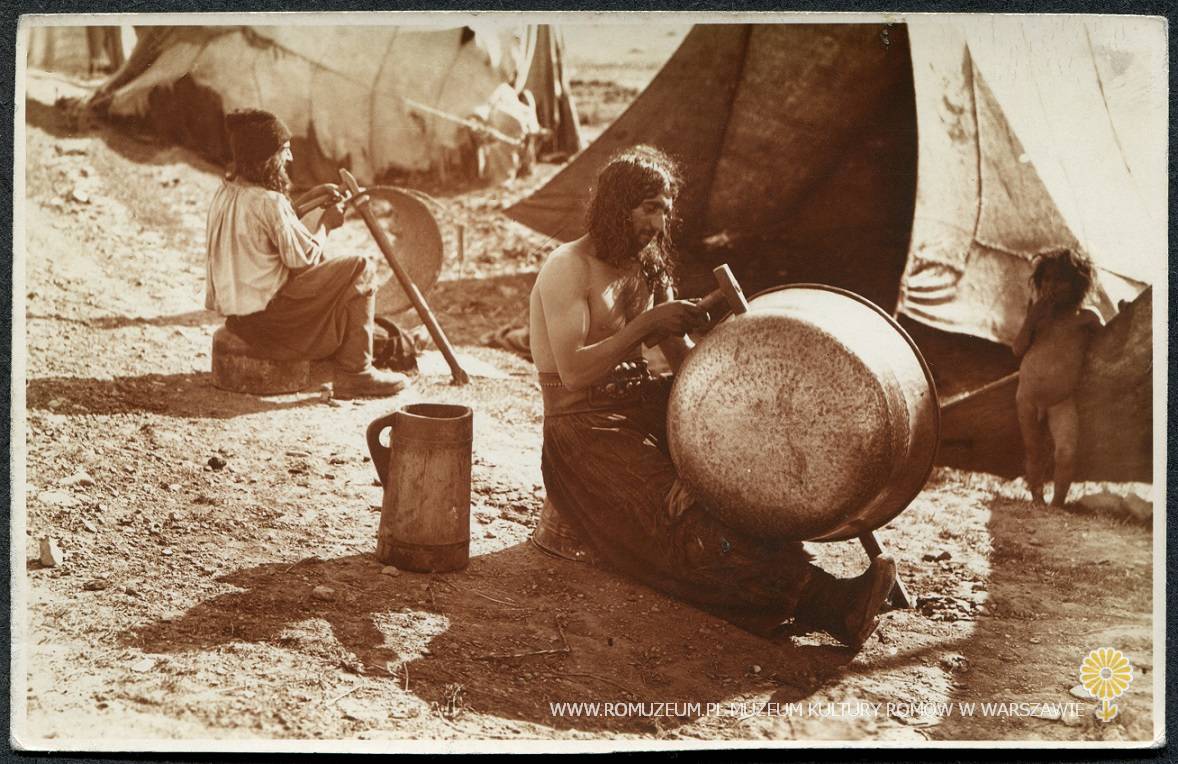
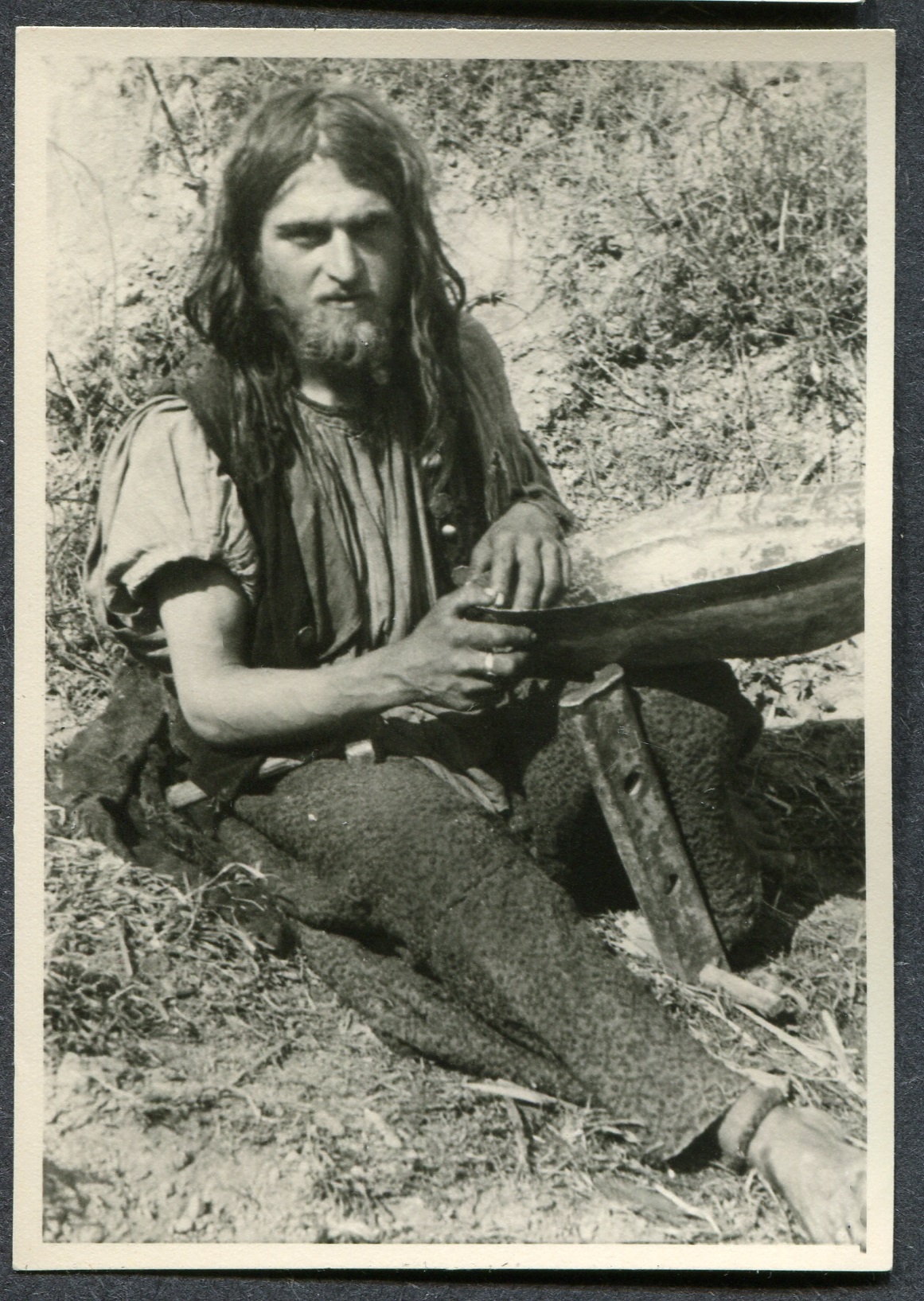
Blacksmithing, making metal pots, horse trading, fortune-telling and music are the jobs most often linked with Roma people. Of course, Roma earned their living in many different ways and worked in many trades, far beyond simple stereotypes. Today in Poland, among these traditional jobs, mainly fortune-telling and music have survived. Metal trades and horse trading are disappearing.
Craft skills such as making metal pots, roofing, producing farm tools and household items from wood or reed, or making clay bricks still help Roma families earn a living in countries like Romania and Bulgaria. Even there, however, these professions are slowly fading. In many Roma groups, the old jobs live on mostly in the group names themselves, such as Nożari, Korytari, Aurari, Rudari, Sitari, Lingurari, Ursari, or the largest group, the Kelderari. Social and economic changes over the last decades have taken work away from thousands of people who once lived by making things with their own hands and selling them cheaply and directly to customers. Today, what remains are artist-craftspeople – the last of their kind – whose work is mostly seen at festivals and fairs showing rare or disappearing crafts.
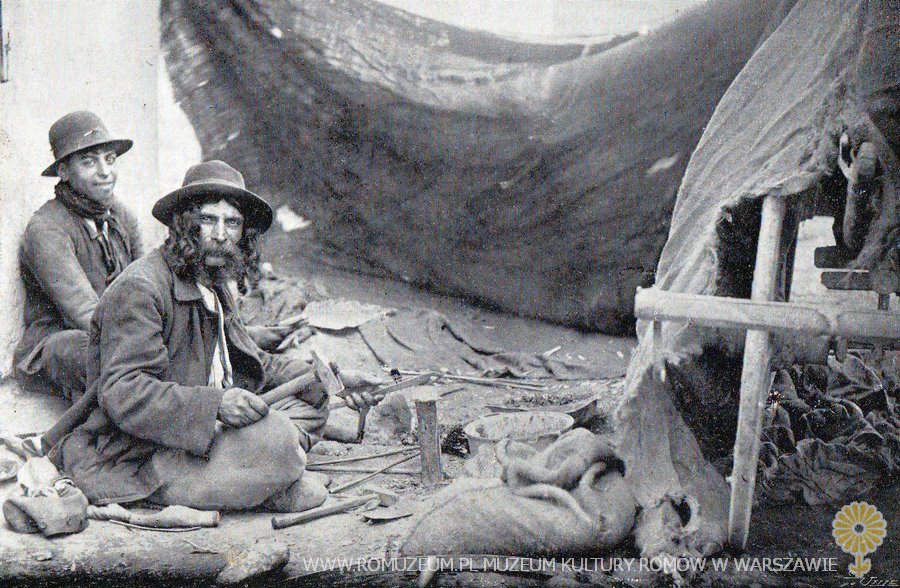
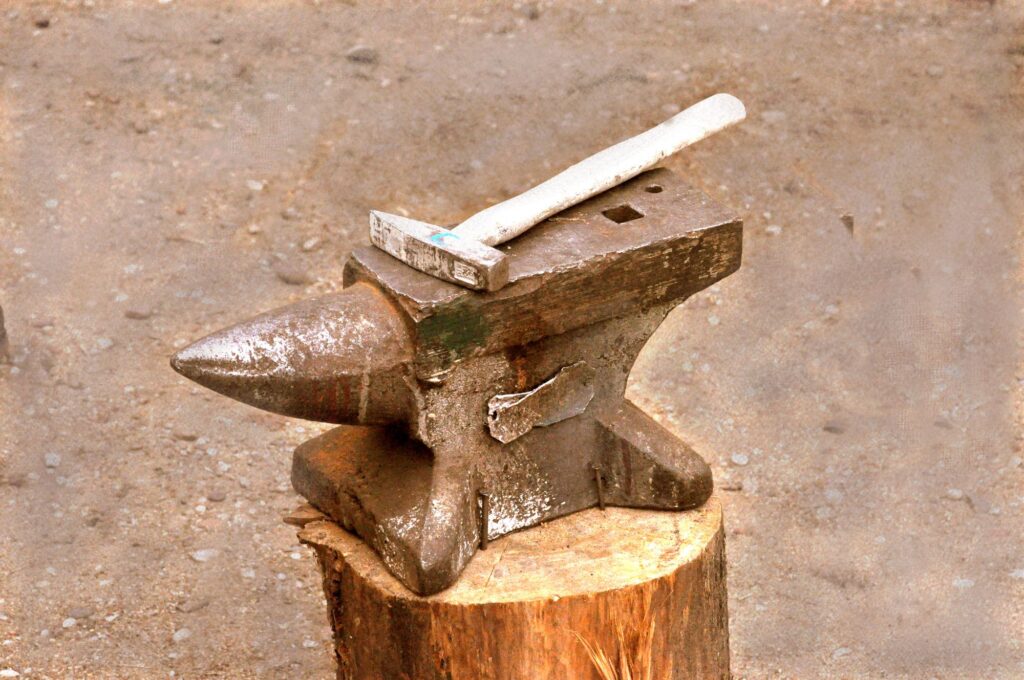
The image of the “Gypsy blacksmith” is one of the strongest in non-Roma culture. The oldest European descriptions of Roma often mention blacksmithing as a common job. In the late Middle Ages and during many wars in Europe, there was strong demand for people who could make and repair weapons and metal equipment. Most soldiers could not afford expensive armourers, so they went to Roma blacksmiths. These forges were often mobile, carried on carts or even on the backs of their owners. Sources from the 16th and 17th centuries, especially from Hungary and the Ottoman Empire, say that Roma blacksmiths also made chains and shackles and used them on prisoners and slaves. Some researchers believe this may have helped create a negative image of Roma.
Farmers were the main clients of Roma blacksmiths. They made and repaired farm tools and shod horses. In mountain villages in Poland, Roma almost completely dominated this trade. “Gypsy” was often simply another word for “blacksmith.” They were respected, and their services were affordable. Industrialisation, the decline of horse use in farming, and factory-made tools destroyed the economic base of this work. Today, in regions once famous for Roma blacksmiths, there is not a single Roma forge left.
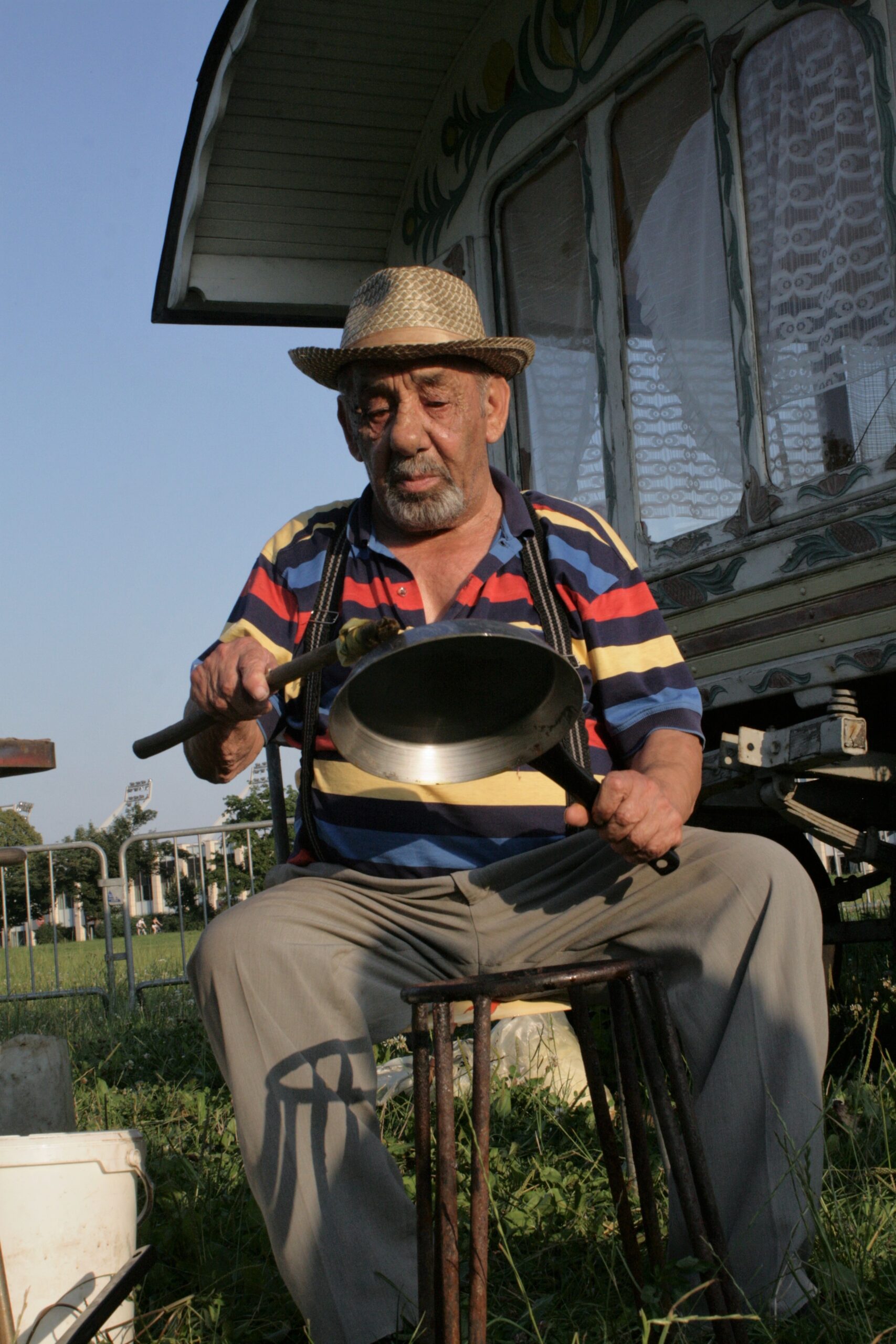
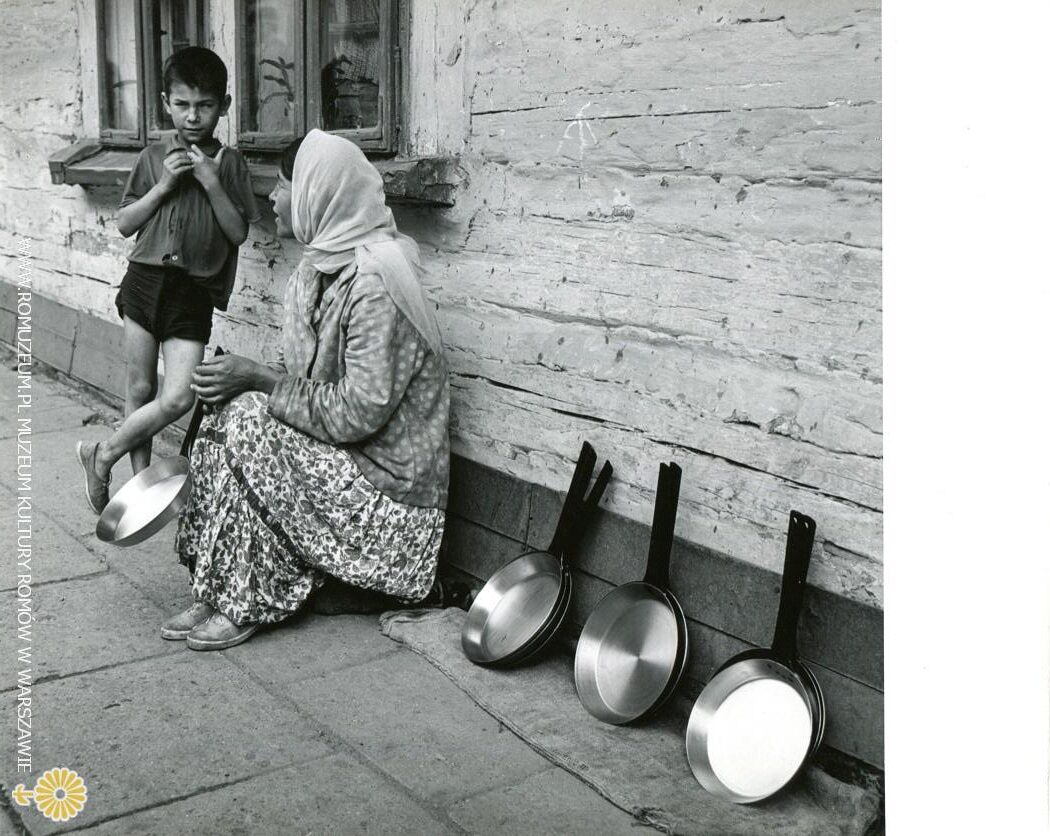
A related metal trade was practiced by Kelderari and some other Roma groups. They made and repaired copper pots and kettles, often coating them with tin. Between the two world wars, Kelderari became relatively wealthy thanks to these skills. Even after World War II, until the 1980s, there was still demand for tin-coating pots in bakeries, breweries and food factories. Many Roma worked independently or in cooperatives. Today, in many homes you can still find old copper pans made by Roma – but more as museum objects than everyday tools.
“Horses, only horses to be sorry for” – this phrase often appears in articles about Roma. For some travelling Roma groups, the horse had a deep, almost mystical meaning. It was a companion and a basic part of life on the road. Roma knew horses very well and used this knowledge in horse trading. For the Lowara group, horse trading at the turn of the 19th and 20th centuries was the main source of income. Other groups did it only occasionally. Profit came from buying horses cheaply in poorer regions and selling them for more elsewhere. Sometimes sick horses were treated and sold at a profit, and sometimes dishonest tricks were used. Over time, horse trading collapsed. Today only a few traders remain, mostly selling horses for slaughter. In some countries, however, the tradition survives. In Finland, Roma families have bred racing horses for generations, and in England some Roma work as breeders and jockeys.
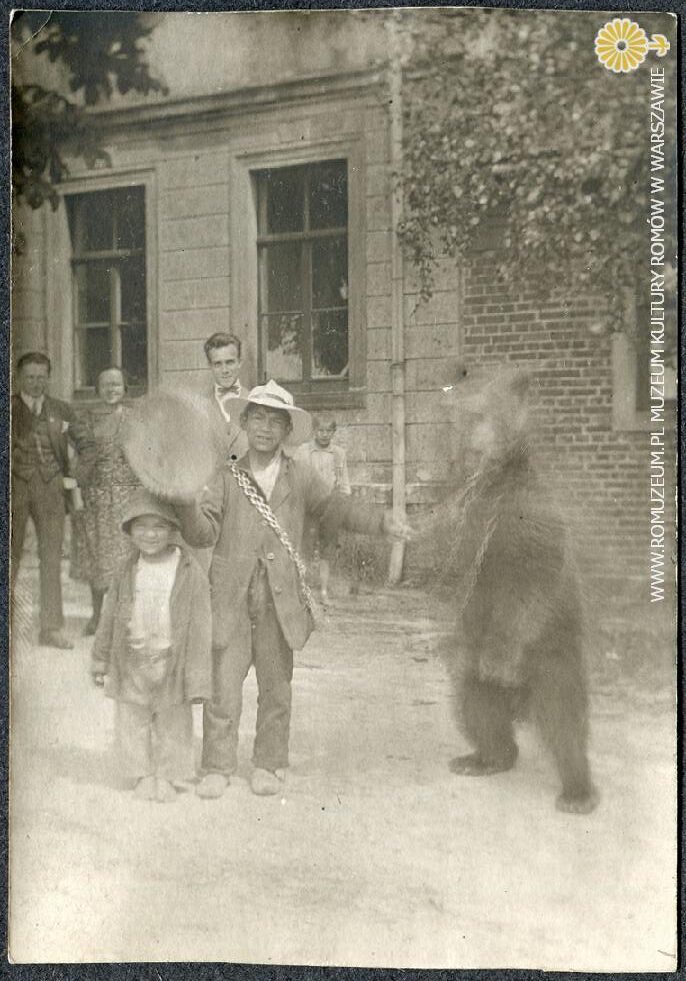
Another profession that now belongs to history is animal training, especially bears. The image of a “Gypsy with a bear” is another strong cultural symbol. The bear leader was seen as an artist, craftsman and even a kind of magician. People believed that a bear led around a farm could chase away illness and evil spirits. This profession existed across Europe, but its centre was in the Carpathian region. In Romania, a Roma group called Ursari specialised in this work. Skills were passed from father to son, though women also took part. Bears, caught when young, became both working tools and travel companions. Shows took place at fairs, markets and weddings. Alongside bears, Roma also used monkeys, dogs, goats and birds. This way of life disappeared in the second half of the 20th century, with growing awareness of animal suffering, stricter animal protection laws, bans on travelling, and the end of Roma nomadism. For Ursari, this meant losing not only their income but also their professional identity.
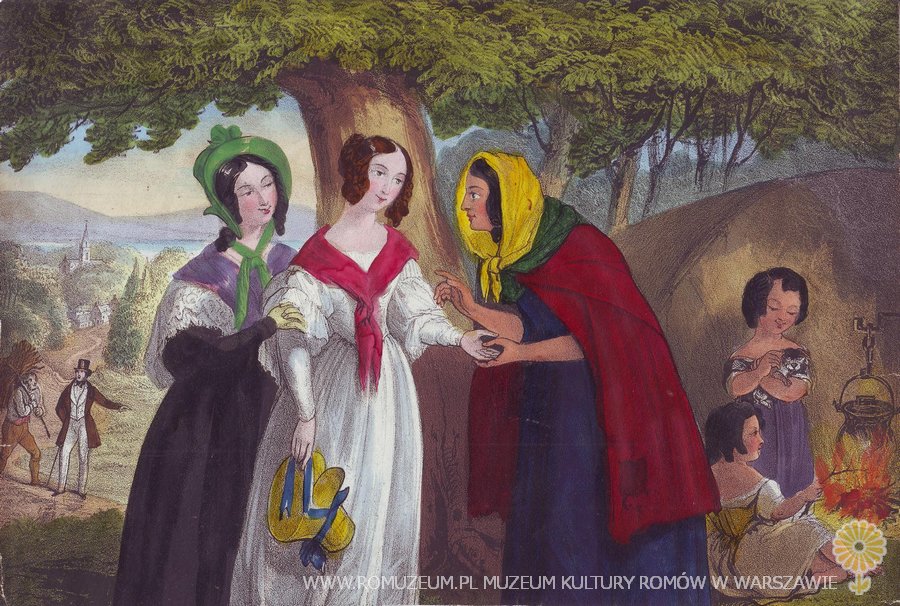
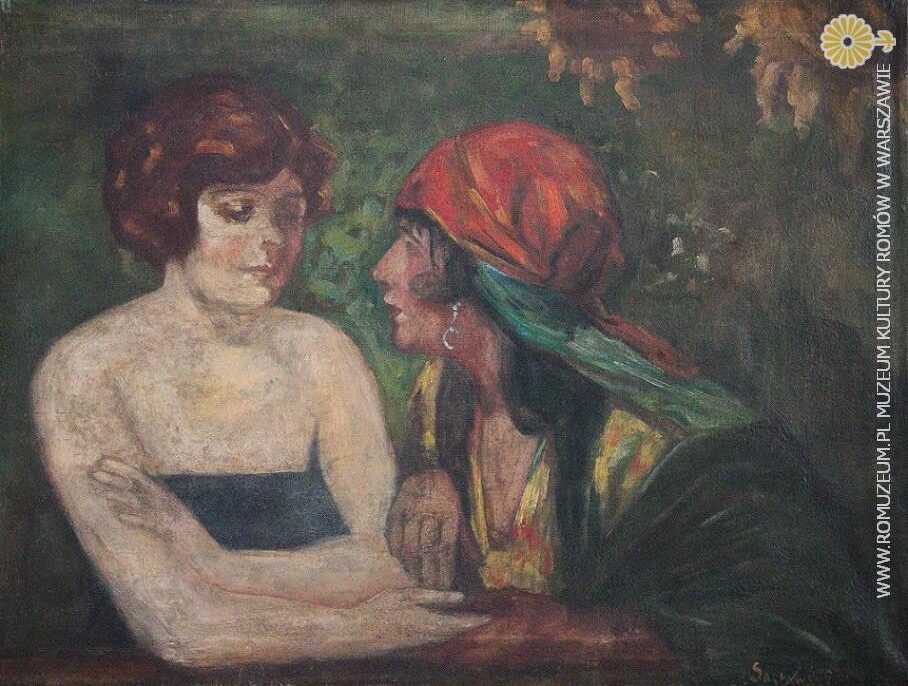
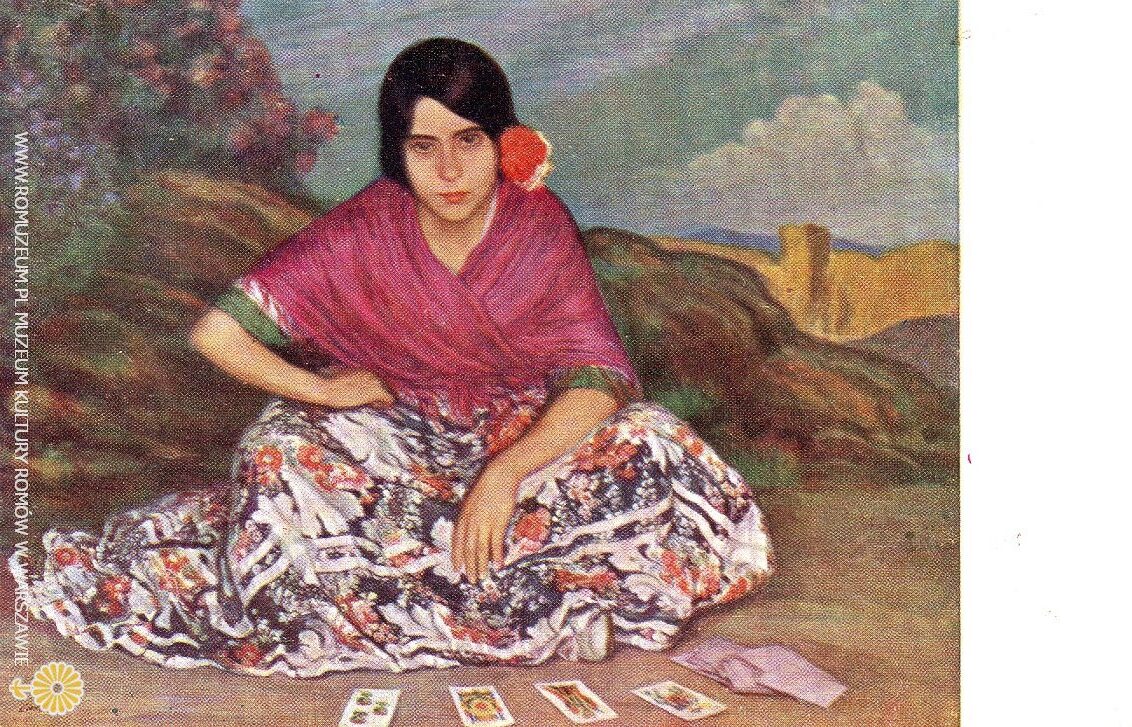
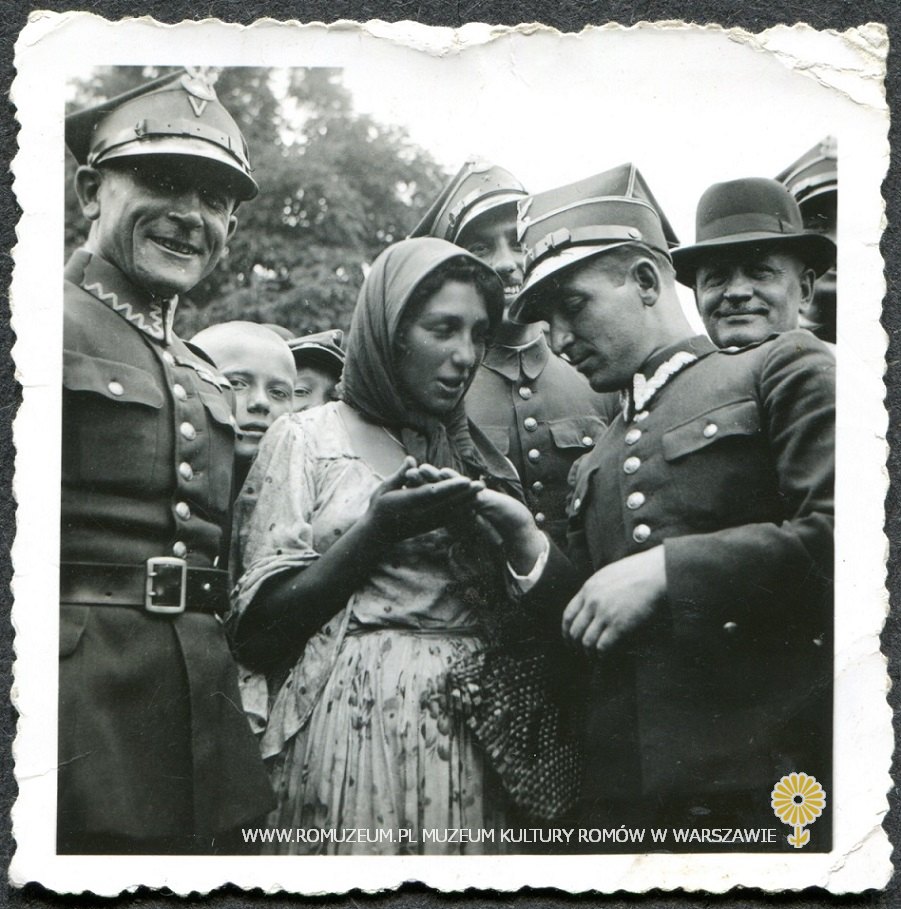
Since Roma first appeared in European awareness, they have been linked with magic and telling the future. The figure of the “Gypsy fortune-teller” is still popular. It is unclear whether these practices came from India. More likely, fortune-telling developed later, influenced by local beliefs in the Byzantine and Balkan regions. There was always strong demand for such services, although fortune-tellers were often accused of working with dark forces. Fortune-telling became a female profession. In some Roma groups, it was for decades the main source of family income. The most common methods are palm reading and card reading, but there are many others. Roma generally do not tell the future for each other, believing it can be dangerous and that the future belongs to God. Fortune-telling is meant for non-Roma clients.
When people think about Roma culture, they most often think about music. Roma musicians have always played at weddings, funerals and celebrations. Their music is lively, emotional and melodic. Roma have long been musicians for hire, adapting their music to the tastes of their audience while adding their own creativity. Roma music is very diverse and often combines local styles. In Poland, Roma music was strongly influenced by Russian romance songs. Today, some Roma musicians mix traditional elements with pop or disco-style music. Others keep closer to traditional Roma roots, but they are usually heard within Roma communities rather than on big public stages.
Today, the most common job among Polish Roma is trade. Many earn money through used cars, textiles, furniture, carpets, antiques and other goods, often thanks to family links abroad. These economic activities began already during the communist period. Some Roma today run petrol stations, trade scrap metal, invest in property, or work in services such as beauty or food businesses. More and more Roma finish vocational schools and universities and work as teachers, engineers or assistants in schools.
However, this group is not the majority. Many Polish Roma do not have stable, registered jobs and rely on temporary work or social support. This especially affects Roma from the Carpathian region, whose traditional service-based jobs disappeared. With the decline of small crafts and unskilled labour, many families face economic hardship and depend on short-term work and welfare.
Andrzej Grzymała – Kazłowski
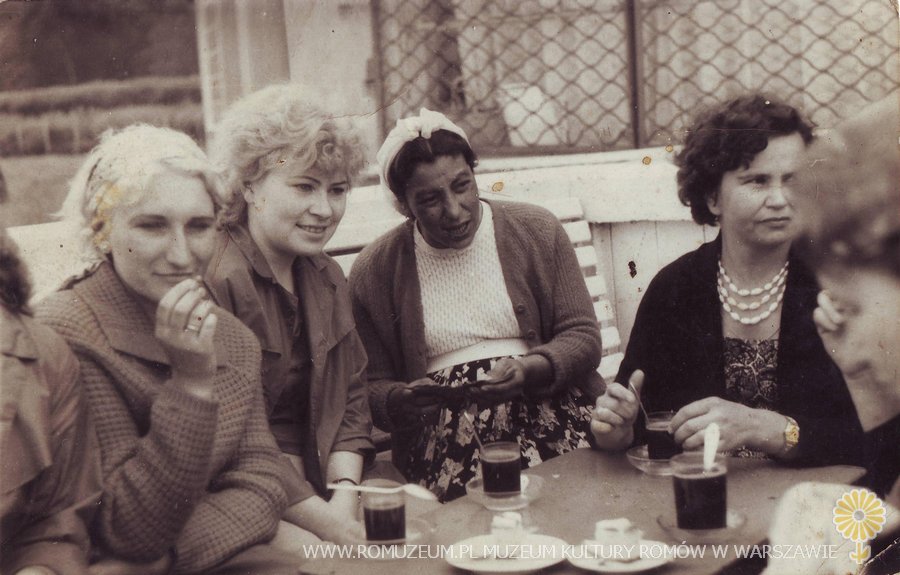
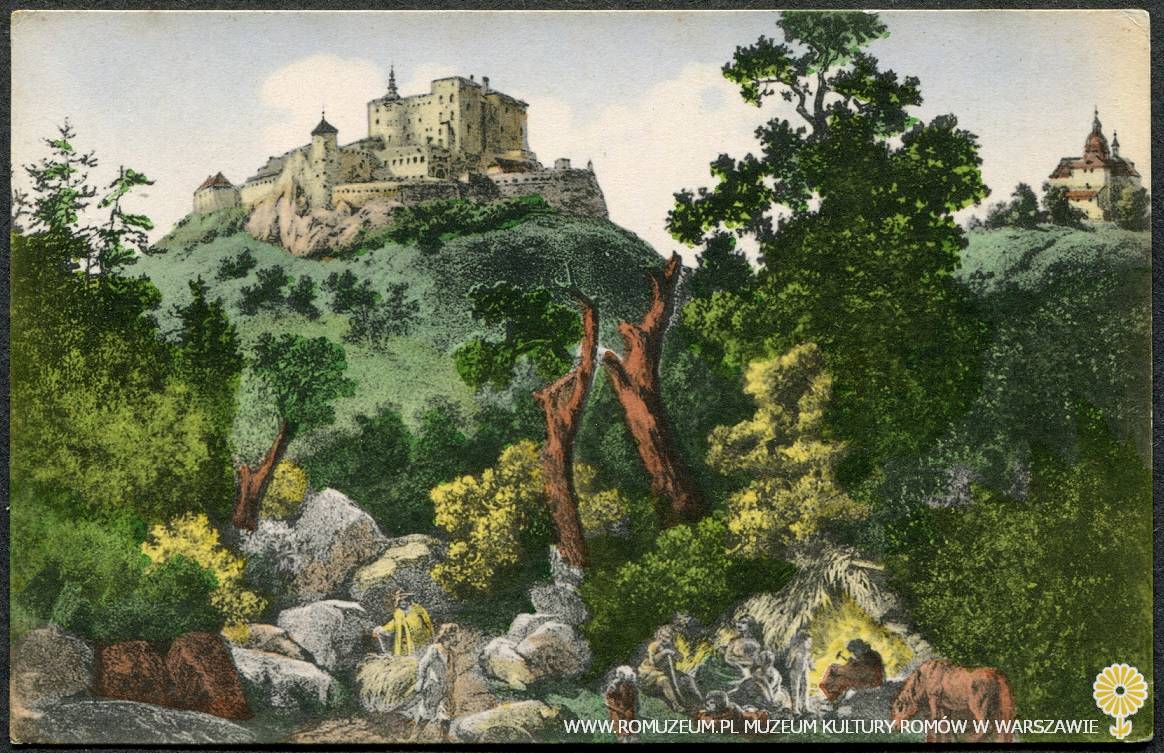
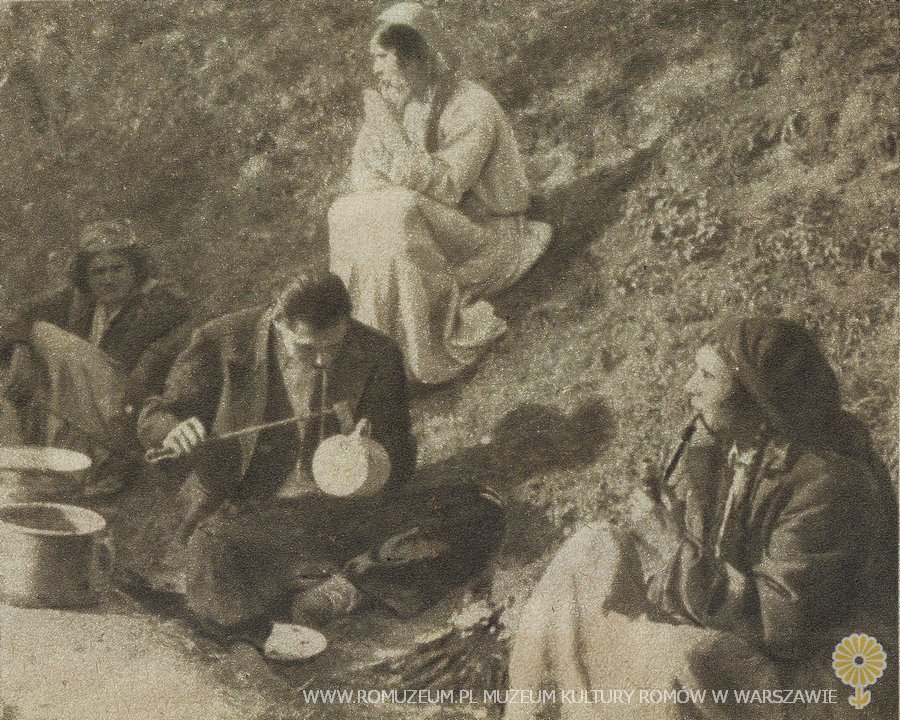
The images come from the collection of Andrzej Grzymała-Kazłowski, the Museum of Romani Culture in Warsaw.
The video created by Delfin Łakatosz features an interview with Wanda Rutowicz, a designer, seamstress and owner of the Romani Fashion Studio. It combines a tutorial on how to sew a traditional Romani headscarf with a captivating story about the history, everyday life and cultural meaning of women’s clothing among Polish Roma.
The recording is part of the Fashion and Clothing Gallery on the e-drom.pl portal.
Rozwój portalu tradycyjnej kultury romskiej E-Dromdofinansowano ze środków Ministra Kultury i Dziedzictwa Narodowego pochodzących z Funduszu Promocji Kultury
E-drom.pl – the Roma Culture Portal will gain a new life thanks to support from the National Recovery and Resilience Plan – Recovery Plan for Culture.
In 2025, the e-drom.pl portal – the most comprehensive online source of knowledge in Poland about the history, culture, and contemporary life of Roma communities – will undergo a major reconstruction and expansion. This project is implemented with co-funding from the National Recovery and Resilience Plan (NRRP) under the Recovery Plan for Culture and aims not only at a technical upgrade of the website, but also at strengthening its content and further development as a documentation, educational and social platform.
As part of the project, we will:
rebuild the portal’s structure to improve navigation, clarity and accessibility,
design a new information architecture and a more user-friendly interface,
reorganize and update the existing thematic galleries,
launch two new digital galleries, including the “Animated Dictionary of Roma Polite Phrases” based on drawings by Roma children and a digital portrait exhibition of contemporary Roma people curated by Delfin Łakatosz.
We will also expand the “Contemporary” Gallery to include new sections on migration, current policies, Roma institutions, community leaders and activists, and international collaborations by Fundacja Dom Kultury (e.g. Roma Leadership School, Summer Workshop Camp). This expanded section will feature podcasts, essays, articles, short videos and interviews with experts. One of the new resources will be the “Living Voices Library” – a series of interviews with Roma activists, conducted by Elżbieta Mirga and Monika Szewczyk.
E-drom.pl is a tool that enables Roma individuals to speak in their own voice. The portal supports self-representation and avoids external mediation, presenting first-person narratives, perspectives, and lived experiences.
The project will also strengthen the digital competencies of the foundation’s team, enhance collaboration with Roma artists and researchers, and expand the visibility and representation of Roma culture in both public and digital space.
The project “E-Drom 2025 – Reconstruction and Expansion of the Portal” is co-financed by the National Recovery and Resilience Plan (NRRP) – Recovery Plan for Culture.